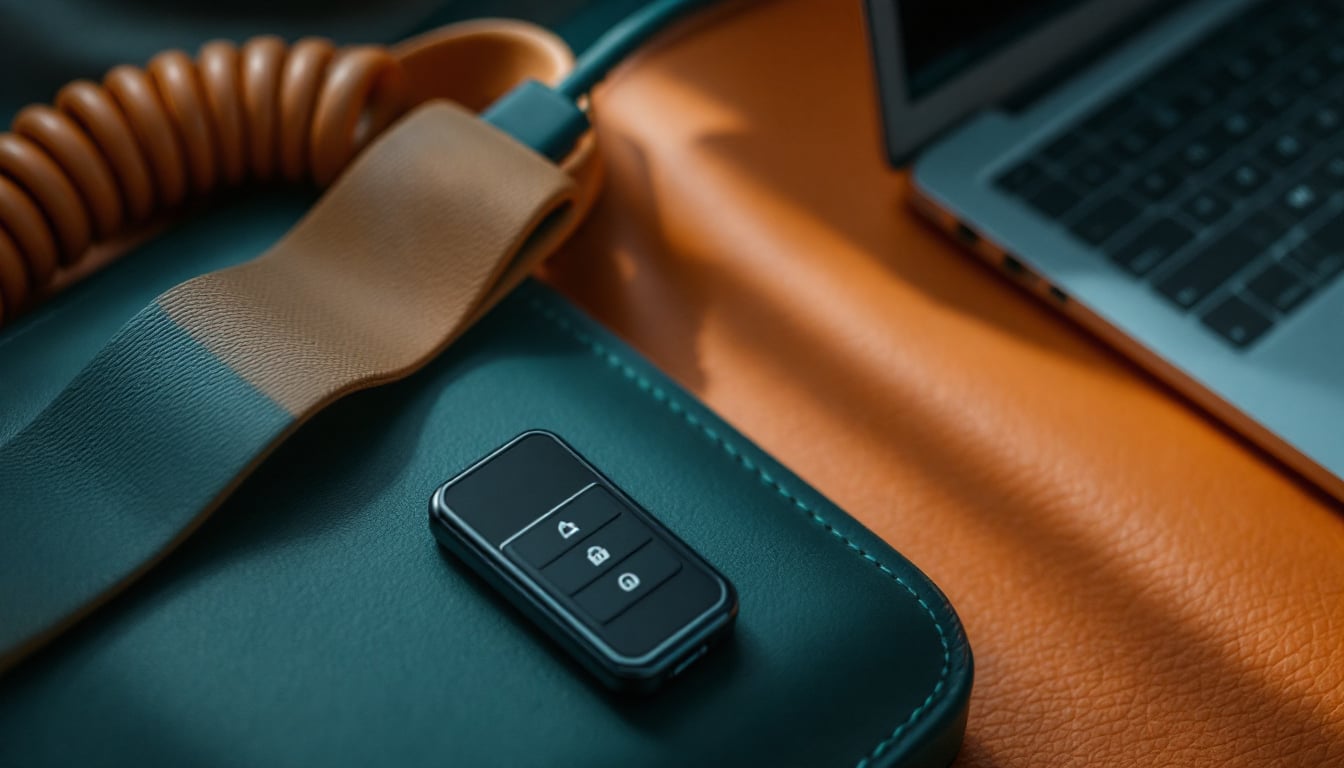
Mercedes-Benz owners tend to arrive at this subject with the same two questions, usually in the same order. Why is the quote so much higher than the number a friend paid for their saloon? And why did three locksmiths say yes on the phone and the fourth say no before hearing the model year?
Both have the same root. Mercedes has, for a long time, built keys that are tightly bound to the individual vehicle rather than treated as generic parts to be cut and paired. That design decision is good for theft resistance and awkward for replacement, and it means the honest answer to almost every Mercedes key question begins with which year.
This guide sets out the eras, what each one implies for the invoice and for coverage, and the facts to have ready before anyone drives to you.
Why this brand sits at the strict end
Three forces compound, and none of them is opportunism.
Volumes and parts channel. Mercedes keys are made in smaller numbers than keys for high-volume mainstream models, and across several generations they remain effectively OEM-supplied. Where no genuine aftermarket equivalent exists, the shop buys at manufacturer parts pricing and passes it on. That alone separates these keys from brands where a competitive aftermarket has driven hardware costs down — a difference the cost-by-make guide maps across the fleet.
Binding rather than pairing. On mainstream vehicles a key is commonly a blank that is cut and then enrolled. On much of the Mercedes range the key is a unit tied to that specific vehicle from the outset, which is precisely why used fobs cannot simply be moved from one car to another.
Authorisation. Immobilizers became universal under the federal theft-prevention framework [2], but manufacturers differ enormously in how they let an independent shop enrol a new key. On newer Mercedes platforms that runs through an authenticated process, and for independents the recognised route is credentialed access to manufacturer security data through the Secure Data Release System operated by the National Automotive Service Task Force [1]. A shop without that access is not being lazy when it declines; it genuinely cannot finish the work.
The eras, described honestly
Model years overlap between ranges and refreshes, so treat these as bands rather than hard cut-offs, and confirm your specific car by VIN.
The infrared era. The earliest electronically locked Mercedes keys used infrared signalling rather than radio, with a plastic key that had to be pointed at a receiver. Owners of these cars are usually dealing with dead internal batteries and worn contacts as much as with programming, and the surrounding advice sits better in classic and older car key replacement.
The early chip-key era. Bladed keys with an immobilizer transponder, conceptually similar to the rest of the industry at the time. This is the widest-coverage band: a well-equipped independent automotive locksmith can generally cut and enrol these.
The keyless-go era. The familiar plastic key that slots into a dash receiver or operates as a proximity fob, with the electronics bound to the vehicle. Coverage here is real but narrower, and it is genuinely equipment-dependent — two shops in the same city can give you different answers about the same car.
The current module-bound era. The newest generations, where enrolment runs through an authenticated manufacturer process. Coverage is thinnest here, dealer routing is most common, and the honest expectation is the top of the price range. If you want to place your own car on this timeline, car key technology by model year is the general version of the same exercise.
What that means on the invoice
| Era | Typical key technology | What the job usually involves | Relative cost tier |
|---|---|---|---|
| Infrared era | Infrared key with internal battery | Battery, contacts, occasional refurbishment | Tier 1 to 2 |
| Early chip-key era | Bladed transponder key | Cut a blade, enrol with a working key present | Tier 2 |
| Keyless-go era | Vehicle-bound smart key | Supply the bound unit, enrol, equipment dependent | Tier 3 |
| Current module-bound era | Module-bound fob, commonly OEM supplied | Authorised enrolment, dealer routing more common | Tier 4 |
| Any era, no working key remaining | Originated key | Origination, ownership check, authorised enrolment | Tier 4, highest by procedure |
| Sprinter and commercial vans | Follows the era of the vehicle | As above, plus fleet authorisation | Varies by era |
Tiers are relative to one another, not a price list. For context on the ordinary range, published consumer guidance places a mainstream chipped-key replacement in the low-to-mid hundreds of dollars once hardware and programming are counted [3]; the upper Mercedes tiers sit above that, and an all-keys-lost job on a late car sits above them again. What the lines on any quote actually mean is unpacked in the anatomy of a car key quote.
Whether a working key survives
This single fact reorders everything above it.
With a working key, the vehicle can be woken and its security system opened through the key it already trusts, and the new key is added in a normal session. With no working key, the technician has to originate one: verify ownership, request the security data, and then work considerably longer at the vehicle. On this brand the gap between those two situations is wider than on most, which is why a Mercedes owner running a single key is carrying more risk than a Corolla owner in the same position.
If that describes you today, what replacement costs with no spare sets the expectation properly. If you still have a working key, the cheapest decision available is a second one now rather than later — the arithmetic is in spare key cost and when to get one, and it applies with unusual force here.
Buyers should treat this as a negotiating point rather than an afterthought. A used Mercedes handed over with a single key carries a real, quantifiable liability, which is the whole subject of buying a used car with only one key.
Why the paperwork is stricter here
Expect to prove the vehicle is yours, and treat a shop that does not ask as a warning rather than a convenience. Ownership verification is what stops key origination from being a theft service, and where enrolment runs through an authenticated manufacturer process it is a formal requirement of that process [1].
Have three things ready: photo identification, a document tying you to the vehicle, and the VIN. Leased, financed, company and fleet vehicles add an authorisation step, because the registered owner may not be the driver — the sequence is set out in rental, lease and fleet car key replacement, and the general checklist is in proof of ownership for car key replacement.
The parts channel is thinner than you are used to
Two consequences worth knowing before you shop for hardware yourself.
Marketplace fobs are a poor bet on this brand specifically. Many of the units offered are used and already bound to another vehicle, and a bound fob cannot simply be reassigned by an independent shop. Most shops that will fit a customer-supplied part will not warranty it, so a refusal on the driveway costs you the programming labour regardless. The general version of that argument is in OEM versus aftermarket car keys.
Availability can also add days rather than hours. Where a key must be ordered, the timeline stops being a same-day question — which is worth factoring in alongside the realistic timings for making a car key.
Coverage: ask about the year, not about the badge
The most useful thing an owner can internalise is that "do you do Mercedes?" is the wrong question. Tooling, software subscriptions and access credentials are bought per platform and per generation, so a shop can be thoroughly equipped for one era of the same badge and unable to touch the next. That is the whole thesis of why key coverage varies between locksmiths.
Ask instead: can you complete a 2019 GLC 300 with one working key present, on site, today? A shop that answers that precisely is worth booking. Location matters too — locksmithing is skilled local labour with published wage variation between states and metropolitan areas [5], and specialist coverage thins outside dense metros, which is the situation described in car key replacement in rural areas.
What to establish before anyone is dispatched
Five facts, given on the phone, will get you a firm quote instead of an estimate:
- Model, model year and body style, plus the VIN
- Whether any key still starts the car
- Whether the car is drivable and where it is parked
- Whether you are the registered owner, or a company is
- Whether you want a second key made at the same visit
Then ask three questions. Is this the price on the driveway, including the trip? Is the key new, or used and previously bound? And if enrolment turns out to need manufacturer access you do not hold, what happens next and what does it cost me? The Federal Trade Commission's guidance on hiring a locksmith is the baseline for the rest — verify the business identity, get the total before work begins, and treat a price that changes on arrival as the warning it is [4]. The practical checklist is in how to verify an automotive locksmith.
If the car currently does not start and you are trying to work out whether the key or the vehicle is at fault, start with the car starts, then shuts off a second later before buying any hardware.
To find shops covering your area and your car, browse automotive locksmiths by state and city and give two of them the five facts above.
Frequently asked questions
Why is a Mercedes-Benz key more expensive to replace than a mainstream car key?
Three things stack up. The hardware is produced in smaller volumes and on several generations remains OEM-only, so a shop buys at manufacturer parts pricing rather than from a competitive aftermarket. The enrolment procedure is more demanding and needs current tooling and, on newer cars, authorised access. And the vehicles have long used designs where the key is bound tightly to the vehicle rather than being a generic part that is simply cut and paired.
Can an independent automotive locksmith make a Mercedes key?
Many can, and coverage depends far more on the model year than on the badge. Older transponder and earlier smart-key generations are handled by a good number of well-equipped independents. The newest generations are where coverage narrows sharply, because key registration runs through an authenticated manufacturer process and only shops that hold that access can complete it. Ask about your exact year and model before dispatch, never after.
What happens if I lose every Mercedes key?
It becomes the most demanding version of this job. Ownership has to be verified, security data usually has to be requested through the manufacturer, and the on-site session is considerably longer than adding a key to a car that can already be started. Budget for the top of the range, expect to produce documents, and expect a longer wait than a same-day duplicate.
Will the shop ask for proof that the car is mine?
Yes, and firmly. Expect photo identification plus a registration, title or insurance document naming the vehicle, and expect the shop to record it. On platforms where the key is registered through an authenticated manufacturer process, that verification is a requirement of the process itself rather than a local house rule, so no legitimate shop can waive it.
Can I buy a Mercedes key online to save money?
It is the riskiest brand on which to try. Many of the fobs sold through marketplaces for these vehicles are used units already bound to another car, or copies built around chips the vehicle will not accept, and a bound fob cannot simply be reassigned by an independent shop. Most shops that will fit a customer-supplied part will not warranty it, so a refusal on the driveway usually costs you the labour anyway.
Is a spare key worth it on a Mercedes specifically?
More than on almost any other brand. The gap between adding a key while one still works and originating a key when none does is wider here than on mainstream vehicles, because the all-keys-lost path adds authorised access and a much longer session. If your car currently has one key, a second one is the single best-value decision available to you.
Does a Mercedes van or Sprinter follow the same rules as the cars?
Broadly yes, with the same era logic — older vans are more widely serviceable and newer ones narrow to shops with current tooling and access. Commercial and fleet vehicles add an authorisation question on top, because the registered owner is often a company rather than the driver, and the shop needs the owner of record to authorise the work.
Sources cited
- National Automotive Service Task Force — Secure Data Release System & Vehicle Security Professional registry (2024).
- NHTSA — Vehicle theft prevention and the federal theft-prevention standard (2024).
- AAA — Car key replacement cost guidance (2024).
- Federal Trade Commission — Hiring a Locksmith (2023).
- U.S. Bureau of Labor Statistics — Occupational Employment and Wages: Locksmiths and Safe Repairers (49-3071) (2024).