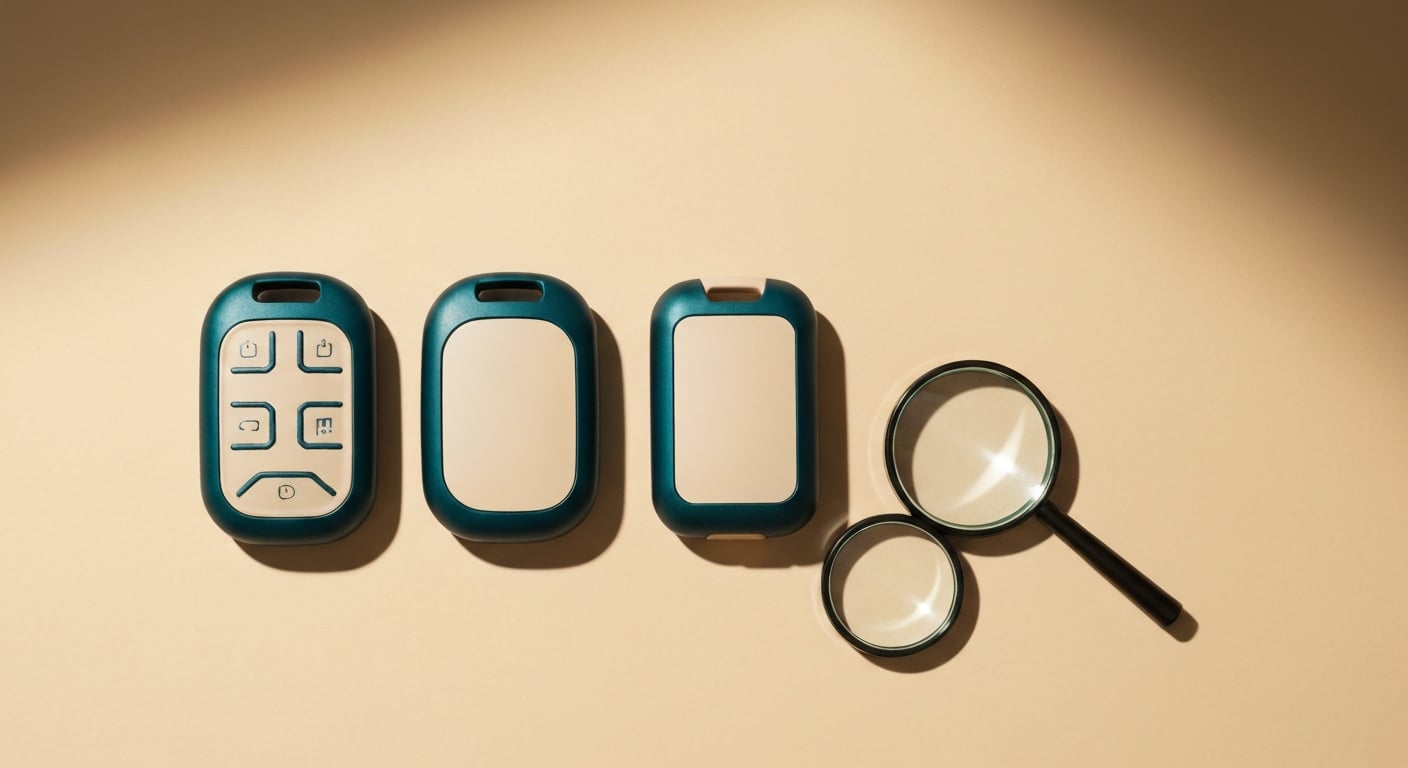
Search for a replacement fob for almost any vehicle and you will find the same-looking object offered at wildly different prices by sellers using at least five different words to describe it. Some of those listings are a genuine saving. Some are a part that no technician on earth can program to your car.
As of August 2026, this is how to tell them apart before you spend anything.
The five things a fob listing can actually be
OEM. Made by or for the vehicle manufacturer, identical to what the vehicle shipped with, usually sold through a dealer parts counter or a distributor. Highest price, lowest compatibility risk.
OES or dealer-equivalent. The same component made by the supplier that produced it for the manufacturer, sold without the vehicle brand on the box. Functionally the manufacturer's part; typically cheaper than buying it over a dealer counter.
Aftermarket. Designed independently to work with the same vehicle. This is the widest and most variable category on the market: the good end is indistinguishable in service, the bad end fails to enroll, has short range, or dies within months. The maker matters more than the word "aftermarket" tells you.
Refurbished. A used shell rebuilt with new buttons or a new board, or a new shell fitted to a working board. Legitimate when the seller is clear about what has been reused; a grey area when the listing simply says "new".
Used. A fob that has previously been programmed to another vehicle. Whether it can be re-enrolled depends entirely on the make and generation — some can be reset, some hold their first bond permanently and are scrap once used.
Those distinctions are worth learning because they are the difference between a bargain and a paperweight. If any of the surrounding vocabulary is unfamiliar, the car key terminology glossary covers it.
The one check that does most of the work
Every remote sold in the United States carries an equipment authorization identifier — the FCC ID — printed on the fob itself, usually on the back or inside the battery compartment. It identifies the radio device, not the vehicle.
That makes it the single most useful compatibility check available to an ordinary buyer. Take your existing fob, read the identifier, and compare it to the listing. The federal database behind those identifiers is public, so the number can be looked up rather than trusted [1].
Two caveats. A matching identifier does not guarantee that a particular vehicle will accept a particular part — button count, chip family and blade profile all still have to line up. And an identifier that a seller does not publish should be treated as a missing answer rather than an oversight; a legitimate seller of an electronic part knows what it is.
How the options compare
| Source | Compatibility risk | Typical price | Best used for |
|---|---|---|---|
| OEM through a dealer | Lowest | Highest | Newest vehicles, proximity fobs |
| OES / dealer-equivalent | Low | High | Same as OEM, at a discount |
| Quality aftermarket | Moderate | Moderate | Older transponder and remote-head keys |
| Unbranded budget aftermarket | High | Lowest | Rarely worth it on a modern vehicle |
| Used | Highest, make-dependent | Low | Only where the make permits re-enrollment |
| Refurbished | Moderate | Low to moderate | A tidy option when disclosed honestly |
The general rule that falls out of this: cheap and old is usually fine; cheap and new is where the failures concentrate. A bladed transponder key for a fifteen-year-old sedan is a mature, well-understood aftermarket product. A proximity fob for a two-year-old crossover is not, and the newest platforms are exactly where blanks and coverage are thinnest — the same supply dynamic described in when the dealer says the key cannot be made anymore, running in the opposite direction.
Why the shop may not want your part
This surprises people, so it is worth stating plainly: many automotive locksmiths decline to program owner-supplied hardware, and it is not a racket.
A shop that sources the part warrants the whole job. A shop programming your part warrants nothing it can control — if the fob fails to enroll, or works for a fortnight and dies, the argument that follows is unwinnable for both sides. The shops that do accept supplied parts generally charge programming labor whether or not the part turns out to work, which is a fair term and one you should hear before the van is dispatched rather than after.
So the practical sequence is: ask about the policy first, then buy. Not the other way round.
Does supplying your own part even save money?
Sometimes considerably; sometimes not at all.
A mobile visit has three cost components: the part, the labor including programming, and the travel. Buying your own part addresses exactly one of them. Published consumer guidance puts modern replacement broadly in the low-to-mid hundreds of dollars [4], and on a mobile job the non-part share of that is substantial — the full breakdown is in anatomy of a car key quote.
Run the comparison honestly:
- Get an all-in quote from a shop that supplies the part.
- Add the part price you found plus that shop's programming-and-travel charge for a supplied part.
- Include the risk: if the part fails, you may pay the labor twice.
Where those two numbers are close, supplying the part is a poor trade. Where the gap is large — commonly on older vehicles with cheap, well-supported keys — it can be genuinely worth doing. More ways to reduce a smart-key bill without buying something unusable are collected in affordable smart key replacement options, and the underlying price gap between formats is quantified in smart key replacement cost versus transponder.
Where make-specific rules bite
Sourcing rules are not uniform across manufacturers, and a few patterns recur often enough to plan around.
- On vehicles where a separate remote and a chipped key are two objects, you may only need one of them — a distinction that decides the entire purchase, covered in the Honda and Acura guide.
- Where a single model year ships bladed keys on one trim and proximity fobs on another, ordering by model year alone is a coin flip. The Ford and Lincoln guide explains why trim matters more on some makes than others.
- Where a vehicle may have no engine immobilizer at all, a "programmable" fob listing is solving a problem your car does not have — see the Hyundai, Kia and Genesis guide.
None of these is exotic. All of them are cheaper to learn before ordering.
The blade is a separate question from the electronics
Listings blur two decisions that a technician treats as entirely independent: the radio and chip inside the object, and the piece of metal sticking out of it.
Uncut versus cut. Most replacement keys and fobs ship with an uncut blade. That is normal and correct — the blade has to be shaped to your vehicle's locks. A listing advertising a "pre-cut" key is either asking you to supply a key code or guessing, and a guessed cut is a key that does not turn.
Cut to code versus copied. A blade can be produced from the vehicle's key code, or copied from an existing key. Cutting to code produces the shape the vehicle left the factory with; copying reproduces whatever wear the donor key has accumulated. On a high-mileage vehicle with a soft, rounded original, cutting to code is meaningfully better, and it is worth asking which method a shop intends to use.
Blade profile matters as much as the electronics. Two fobs with the same radio identifier can take different blade types, particularly across trim levels and mid-cycle changes. A part that is electronically perfect and mechanically wrong is still the wrong part.
The practical upshot: when you ask a shop whether a part will work, you are asking two questions. Ask both.
Buying a key is not buying a service
One last distinction that catches people out. A key or fob purchased online is a component. Turning it into something that starts your car requires cutting and enrolling, and on any modern vehicle enrollment involves authenticated access to manufacturer security data with the technician establishing that the vehicle is yours [3]. No purchase changes that requirement.
That is also why the sellers promising a "pre-programmed, ready to use" fob for a modern immobilizer vehicle deserve scepticism. Pre-cut is plausible if you supply a key code. Pre-programmed to a vehicle the seller has never seen is not.
When you do choose a shop, get one total covering the part, cutting, programming and travel, in writing, before dispatch — federal consumer guidance singles out a price that changes on arrival and a company that will not identify itself as the two clearest warning signs in this trade [2], and an independent business profile and complaint history is a further check worth thirty seconds [5].
The short version
Match the FCC identifier. Prefer OEM or dealer-equivalent for new vehicles and proximity fobs; consider quality aftermarket for older bladed keys where the savings are real. Ask the shop's supplied-part policy before you buy. And treat any listing that will not state what the part is as a listing that knows you would not want it.
KeyAtlas is a directory, not a locksmith and not a parts seller. Search the directory for automotive locksmiths listed near you, or get matched to compare quotes from screened car-key specialists — including, if you want it, a straight answer on whether supplying your own part is worth it for your vehicle.
Frequently asked questions
What is the difference between an OEM and an aftermarket key fob?
An OEM fob is made by or for the vehicle manufacturer and matches the part the vehicle shipped with. An aftermarket fob is made by an independent manufacturer to work with the same vehicle. The internal radio and chip may be functionally equivalent or may be a close approximation, and quality across the aftermarket ranges from excellent to unusable, which is why the brand of an aftermarket part matters more than the label on it.
How do I check whether a fob I found online will work on my car?
Compare the equipment authorization identifier — the FCC ID — printed on your existing fob with the one in the listing. It identifies the specific radio device rather than the vehicle, so it is the closest thing to a definitive compatibility check available to a consumer. A matching identifier is not an absolute guarantee, but a mismatch is close to a guarantee of failure.
Can a used key fob be programmed to my car?
Sometimes. Some fobs can be reset and re-enrolled to a different vehicle; others permanently retain a bond to the first vehicle they were programmed to and are effectively scrap once used. Which category yours falls into depends on the make and generation, so ask a shop about your specific vehicle before buying a used part.
Why will some locksmiths not program a fob I supply?
Because they cannot warrant hardware they did not source. If a supplied part fails to enroll or dies a week later, the shop is left arguing about whose fault it is on a job it made little on. Shops that do accept supplied parts usually charge programming labor whether or not the part turns out to work, which is a reasonable term but one worth hearing in advance.
Is an aftermarket key ever the right choice?
Frequently. For older bladed transponder keys and common remote-head keys the aftermarket is mature and the savings are real. The risk rises with proximity fobs on newer platforms, where tighter security and newer radio designs leave less room for an approximation. Cheap and old is usually fine; cheap and new is where problems concentrate.
Does buying my own key actually save money?
It can save on parts and it does nothing about labor, travel or programming, which are often the larger part of a mobile visit. It also transfers the compatibility risk to you. If a shop quotes an all-in price that is close to the part price plus a call-out, supplying your own part is rarely worth the exposure.
Sources cited
- Federal Communications Commission — Equipment Authorization (FCC ID) search (2025).
- Federal Trade Commission — Hiring a Locksmith (2023).
- National Automotive Service Task Force — Secure Data Release System & Vehicle Security Professional registry (2024).
- AAA — Car key replacement cost guidance (2024).
- Better Business Bureau — Business profiles and complaint history (2024).