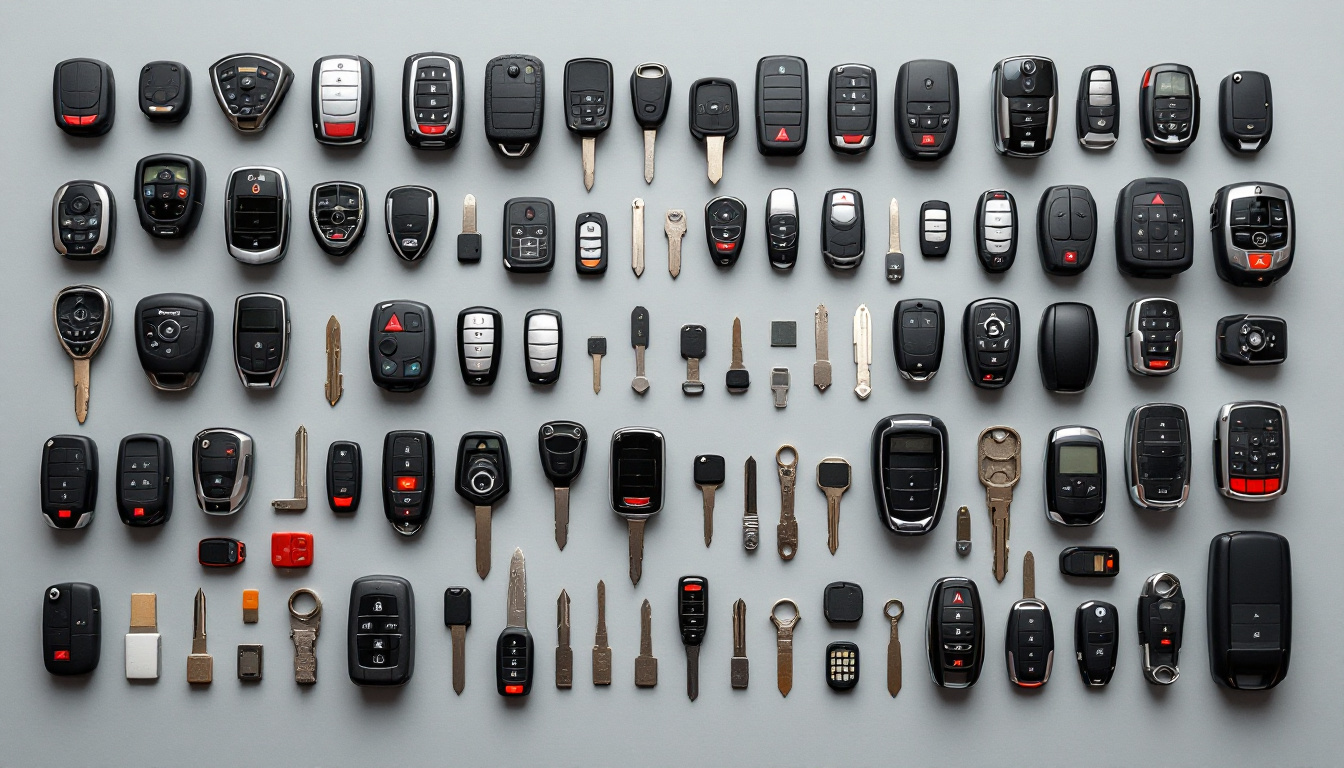
Every car key quote arrives with vocabulary attached. Some of it is genuine technical necessity, some is trade shorthand, and a small amount is used to make a simple job sound complicated. As of July 2026, this is a plain-English reference for the terms owners actually encounter — grouped by what they are about, with a note on how each one affects what you pay.
The six terms that decide your bill
If you read nothing else, these are the ones that actually move money.
| Term | Plain meaning | Effect on price |
|---|---|---|
| All keys lost | No working key exists | Largest single increase — forces origination |
| Origination | Making a key with none to copy | Higher than duplication, needs code or decoding |
| Proximity fob | The pocket key on push-button cars | Highest hardware cost of any key format |
| Programming | Enrolling the key into the immobilizer | Reflects tooling and subscription cost, not minutes |
| Service call | Sending a technician to you | Scales with distance; disappears if you drive in |
| All-in quote | One total covering everything | The only quote that can be fairly compared |
Everything below is the fuller reference, grouped by what it is about.
Key types and formats
Mechanical key. A shaped piece of metal with no electronics. Found on vehicles before immobilizers became standard. The cheapest key job in existence because there is nothing to program.
Transponder key. A metal key with a passive radio chip in the plastic head. The vehicle energizes the chip through a coil at the ignition and reads back an identifier; without a recognised answer the engine will not keep running. The mechanics are covered in transponder and smart key programming explained.
Remote-head key. A transponder key with the lock and unlock buttons built into the head, so one object does three jobs. Convenient, and more expensive to replace than a plain chip key because a cracked housing or a failed button takes the chip with it.
Proximity fob / smart key. A fob you keep in a pocket. The vehicle detects it, unlocks on a handle touch, and starts on a button press. The most expensive key format on the market — it is a small radio computer. The gap is quantified in smart key replacement cost vs transponder.
Emergency blade. The small mechanical key hidden inside most proximity fobs, used to open a door when the fob battery is dead. Also called a valet blade on some vehicles.
Key card. A credit-card-shaped credential used by a handful of manufacturers in place of a fob.
Phone-as-key. A digital credential stored on a smartphone, communicating over Bluetooth or ultra-wideband. A convenience layer rather than a replacement: vehicles equipped with it still ship a physical key or card.
Valet key. A restricted key that starts the vehicle but may not open the trunk or glovebox.
Cutting and blades
Blank. An uncut key of the correct profile for your vehicle before the cuts are made. Blank availability, not technical difficulty, is what usually stops an older vehicle being keyed — the situation in when the dealer says they cannot make that key anymore.
Keyway. The shape of the slot the key slides into, and the matching profile on the blade. Determines which blanks physically fit.
Edge cut. A traditional key with notches cut into one or both edges. Standard on older vehicles.
Laser cut / sidewinder / internal cut. A thicker blade with a winding groove milled into its flat face rather than notches on the edge. More secure, requires a different and more expensive cutting machine.
Duplication. Copying an existing key. Fast and cheap — and it faithfully reproduces any wear in the original, which is why an old worn key duplicated onto a new blank sometimes still fights the ignition.
Origination. Producing a correct key with no key to copy, from the vehicle key code or by decoding a lock. The harder half of the trade and the reason a lost-key job costs more than a spare.
Decoding. Reading a lock cylinder directly to determine the correct cuts. The fallback when no key code is available, and a genuine skill test for a shop.
Key code. A manufacturer reference describing the exact cuts for a specific lock. Access is controlled and retrieval requires verified ownership.
Security systems
Immobilizer. The system that prevents the engine running unless an authorized key is present. Effectively universal on new vehicles for two decades, following the federal theft-prevention framework [1], and with a well-documented effect on theft rates for equipped vehicles [4].
Security light / key icon. The dashboard indicator for the immobilizer. Lit steadily during normal operation on some vehicles; flashing or persistent usually indicates a fault or an unrecognised key.
Start-then-die. The classic immobilizer symptom: the engine fires and is cut within a couple of seconds because authorization failed. The most reliable indicator that you have a key problem rather than a mechanical one — see is it the key or the ignition.
PIN / security code. A vehicle-specific code some platforms require before a new key can be enrolled. Not something an owner looks up; a shop retrieves it through an authorized channel.
Rolling code. A scheme where the transmitted code changes on every button press according to a sequence the fob and vehicle share, so a captured transmission cannot be replayed.
Passive entry. Unlocking by touching or approaching the handle with the fob nearby, without pressing anything.
Relay attack. A theft technique that extends the radio conversation between a fob indoors and a vehicle outside, making the car believe the key is present. Vehicle theft trends are tracked nationally [5]; later fobs mitigate this with motion sensing that stops transmission when the fob is still, and ultra-wideband ranging that measures true distance.
Secure data release. The credentialed, logged channel through which a registered technician obtains manufacturer security information needed to complete key work [3]. It is why the shop asks for your identification — see proof of ownership for a car key.
Programming vocabulary
Programming / enrollment. Teaching the vehicle to accept a new key identifier. The general-purpose method, and the only option when no working key exists.
Cloning. Copying an existing transponder onto a new chip so the vehicle believes it is seeing the same key. Fast, but requires a working key and does not add a key to the vehicle's memory.
On-board programming. A sequence an owner can perform without tools, typically requiring one or two already-working keys. Common on older vehicles, largely absent from proximity platforms.
Key memory / slots. The limited number of keys a vehicle can hold. Reaching the limit means an existing key must be erased before another is added.
Erase all keys. Clearing the vehicle's stored keys so only newly enrolled ones work. The correct step after buying a used car whose key history is unknown, and after any theft attempt.
Tool coverage. Whether a shop's diagnostic equipment and current software subscription support your specific platform. Invisible from a map and the reason a nearer shop is sometimes the wrong shop.
Money vocabulary
All keys lost (AKL). No working key exists. The largest single price factor in the trade, because it forces origination plus a full trust-establishment procedure. The full walkthrough is in what an all-keys-lost job involves.
Service call / trip charge. The cost of sending a technician and equipped vehicle to you. Legitimate everywhere; it should be disclosed before dispatch, never on arrival.
All-in quote. A single total covering hardware, cutting, programming, travel and tax. The only kind of quote that can be fairly compared between shops — the reasoning is in anatomy of a car key quote.
OEM. Original equipment manufacturer parts, supplied by or for the vehicle maker.
Aftermarket. Parts made by a third party to fit the same application. Often cheaper, quality varies, and compatibility should be confirmed by FCC identifier rather than appearance.
FCC ID. The equipment authorization identifier printed on any radio transmitter sold in the United States, searchable through the FCC's public lookup [2]. The single most reliable compatibility check when buying a fob.
New old stock (NOS). Original parts still held unsold by suppliers years after production ended. A common route for discontinued keys.
Hardware and faults
Ignition lock cylinder. The mechanical part your key enters and turns. Wears out with age; standard automotive locksmith work.
Ignition switch. The electrical component behind the cylinder that actually energizes circuits. A different part with different failures, usually mechanic territory.
Antenna ring / coil. The loop around the ignition cylinder that energizes and reads the transponder chip. When it fails, a perfectly good key stops being recognised.
Wafers. The spring-loaded plates inside an automotive lock that the key's cuts lift into alignment. Worn wafers plus a worn key is the classic "it only turns if I wiggle it" complaint.
Steering lock. The mechanism that immobilizes the steering wheel when the key is removed. If it binds under load the key physically cannot turn — rock the wheel gently rather than forcing the key.
Coin cell. The small round battery in a fob. The cheapest and most common cause of a "dead key", and the first thing to rule out per our key fob replacement guide.
Terms that should make you ask a follow-up question
Not everything in this vocabulary is used carefully. Three worth pushing back on:
"Starting at." A price with this attached is a hardware or lockout figure, not a total. Ask what the final invoice will say. Federal consumer guidance is explicit about getting the full price and the company's identity in writing before work begins [6].
"We can do all cars." No shop covers every platform. A confident answer to do you cover this exact VIN? is worth far more than a broad claim.
"You need a new key" — offered before anyone has tried the spare or checked the fob battery. That is a diagnosis skipped, and it is the most common way owners pay for a part that does not fix the problem.
Our seven-point verification check is the ninety-second phone version of all three.
Using this glossary on a real call
You do not need to speak the language. You need to describe the symptom and supply the VIN. But knowing what the words mean lets you hear the difference between a shop explaining a real constraint and one padding a quote — and that is worth more than any single term on this page.
To send your details once instead of repeating them, get matched forwards them to screened automotive locksmiths. You can also browse the directory by state and city, or start from a hub such as California, New York or Virginia.
Frequently asked questions
What is a transponder key?
A key with a small passive radio chip embedded in its head. When you insert it, a coil around the ignition energizes the chip and reads back an identifier. If the vehicle does not recognise that identifier, it will not stay running. This is why a correctly cut key can open your doors and still fail to start the car.
What does "all keys lost" mean?
It means no working key exists for the vehicle, so a new one has to be originated from scratch rather than copied. It is the single largest price factor in car key work, because it requires deriving the mechanical cuts without a key to copy and establishing trust with the security system from nothing, usually with documented proof of ownership.
What is the difference between cloning and programming a key?
Cloning copies an existing transponder chip onto a new one so the vehicle sees what it believes is the same key. Programming enrolls a genuinely new identifier into the vehicle security system, which then recognises an additional key. Cloning is quicker and works only where a working key exists; programming is the general-purpose method and the only option when no key remains.
What is a key code?
A manufacturer reference that describes the exact cuts for a specific vehicle lock, so a key can be produced without an original to copy. Access to key codes is controlled, and a shop retrieves them through authorized channels after verifying ownership. Where a code is unavailable, a technician can often decode the cuts from the lock itself.
What does FCC ID mean on a key fob?
It is the equipment authorization identifier for the radio transmitter inside the fob, required for any radio device sold in the United States and printed on the fob itself. It is the most reliable way to confirm whether a replacement fob is genuinely compatible, because two fobs that look identical in photographs may be different parts.
What is a rolling code?
A security scheme in which the code sent by your remote changes on every use according to a sequence both the fob and the vehicle know, so a code captured by someone listening cannot simply be replayed. It is standard on modern remote entry and is the reason a recorded button press is not a usable key.
Sources cited
- NHTSA — Vehicle theft prevention and the federal theft-prevention standard (2024).
- Federal Communications Commission — Equipment authorization and FCC ID lookup (2024).
- National Automotive Service Task Force — Secure Data Release System & Vehicle Security Professional registry (2024).
- Insurance Institute for Highway Safety — Vehicle theft and anti-theft technology (2024).
- National Insurance Crime Bureau — Vehicle theft trends and prevention resources (2024).
- Federal Trade Commission — Hiring a Locksmith (2023).