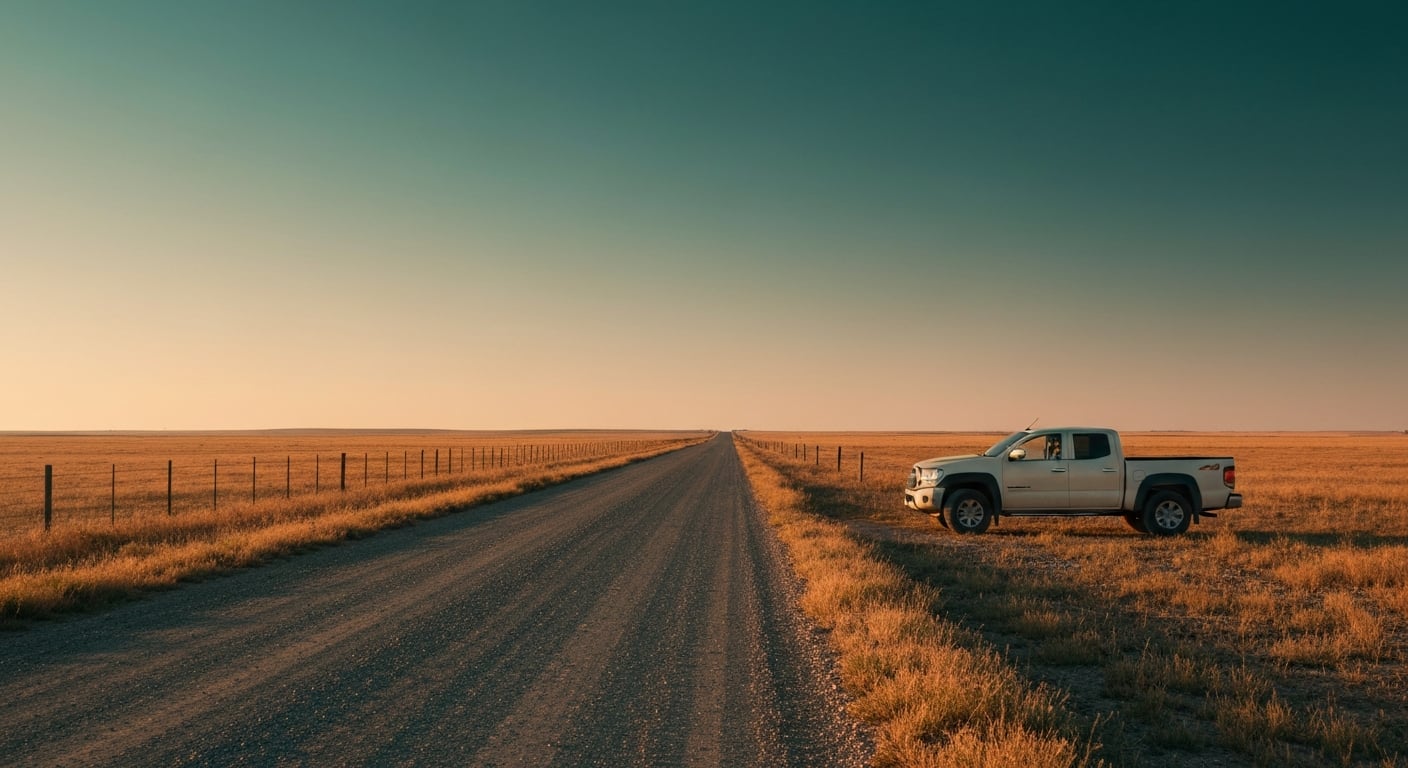
Advice about car keys is written as though a mobile technician is forty minutes away from everyone. For a substantial share of the country that is not the case, and the gap is not small. A meaningful portion of the United States population lives outside urbanised areas as the federal classification defines them [2], and the automotive key trade is concentrated in more or less the opposite pattern.
As of August 2026, the technical work on a rural key job is identical to the same job in a city. Everything around it — who will come, when, and what it costs to get them there — is different. This guide is about that everything.
Why coverage thins with distance
It helps to see the problem the way a shop does, because the answer you get on the phone follows directly from it.
Automotive key work requires a substantial equipment investment: cutting machines, programming hardware, software subscriptions, and a stock of blanks and fobs broad enough to cover the vehicles that actually turn up. That investment is paid off by volume, and volume follows vehicle density. Employment in the trade tracks that concentration closely [1].
Now add the drive. A round trip of three hours to a single remote address costs a shop the working hours it would otherwise spend on two or three closer jobs. Unless the price reflects that, taking the call is a loss. This is the whole explanation for the pattern rural drivers experience as indifference: the flat refusal, the vague maybe next week, the number that sounds high relative to what a friend in the city paid.
None of it is arbitrary, and understanding it changes how you negotiate. The general version of the coverage question is in why locksmith key coverage varies, and the national picture is in automotive locksmith coverage across the US.
Travel charges, and what a fair one looks like
A travel or mileage charge is legitimate. It is the mechanism that makes a distant call possible at all, and a shop that has one is a shop that will actually come.
What matters is when you learn about it. A travel charge quoted on the phone, as part of a single all-in total, is a business being straightforward. A travel charge that appears on arrival, after you have waited half a day, is not — and neither is a total that grows once the technician sees the vehicle. Federal consumer guidance on hiring a locksmith makes exactly this point about confirming price and business identity before work begins [4].
Ask for one number that includes the trip, the labour, the part and any after-hours element, and ask whether anything could change it. The complete anatomy of that figure is in anatomy of a car key quote.
Route days are the real scheduling unit
The single most useful thing to understand about rural service is that many shops do not schedule outlying calls individually. They batch them.
A shop covering a wide territory will often run in a given direction on set days, gathering several jobs along the route so the mileage divides across them. That is why the answer to how soon can you come is frequently a day of the week rather than a number of hours, and why pushing for same-day service sometimes costs several times more than accepting Thursday.
It also gives you a lever nobody mentions. If a neighbour, a relative or the shop up the road needs key work too, two jobs on one route are cheaper per job than one, and shops are usually glad to hear about it. In small communities this happens naturally once someone asks.
| Distance from the nearest equipped shop | What to expect | Best approach |
|---|---|---|
| Under 30 miles | Ordinary mobile service, modest or no travel charge | Book normally |
| 30 to 60 miles | Travel charge, possibly same day | Ask for the all-in total up front |
| 60 to 120 miles | Route day scheduling, meaningful travel charge | Be flexible on the day, price a tow as well |
| Over 120 miles | Few or no mobile options for programming | Consider driving to the shop, or a tow |
| Any distance, all keys lost | Fewer shops willing, longer lead time | Start calling early in the day, expect referrals |
When towing beats waiting
Rural drivers under-use this option, usually because a tow feels like an escalation.
Run the arithmetic instead. A tow to a shop an hour away is a known cost that can be arranged quickly, and it opens up every shop in that town, including the ones that do no mobile work at all and are therefore invisible to a search for someone who will come out. Against that, towing moves a vehicle you may prefer not to move, adds handling risk, and means collecting the car afterwards.
The comparison is worth making explicitly whenever the travel charge starts to approach the tow cost, and especially when no working key exists, since an origination job is where mobile availability is thinnest. The trade-offs between dealer and independent service, which change once the vehicle is mobile anyway, are in dealer versus locksmith for a car key.
What can and cannot be done remotely
There is a persistent hope that a key can simply be posted out. It is half right, and the half that is wrong is the important one.
The mechanical part of a key can sometimes be produced without the vehicle, where the cuts derive from a key code rather than from copying an existing key. On older vehicles with no immobilizer, that can genuinely be the whole job, which is why owners of older trucks and cars occasionally find this far easier than expected.
The electronic part almost never can. Enrolling a credential requires communication with the vehicle itself, so a programmed key is made at the car, full stop. A blank that arrives in the post is a blank, and a fob bought online is an unprogrammed fob. The distinction between those two halves of the job is explained in transponder and smart key programming explained.
Look locally before you look far
The search that fails rural drivers is the one that looks only for businesses describing themselves as automotive locksmiths, because in a small town that description may not exist while the capability does.
Three places worth a phone call before you resign yourself to a long-distance trip. The general repair garage, which in a rural community often handles work that would be split between three specialists in a city, and which sometimes owns programming equipment because it had no alternative. The farm or heavy-equipment dealer, which deals in vehicle security for its own machines and may know exactly who covers cars locally. And the hardware or general store that cuts keys, which will not programme anything but frequently knows who does, because everyone who has had this problem has already asked them.
The second value of those calls is the referral rather than the service. In areas with few businesses, everyone knows who does what, and thirty seconds on the phone to a garage that cannot help you often produces a name and number that no search would have surfaced. That informal network is, in practice, how a lot of rural key work gets scheduled.
Worth asking each of them one question: who comes out this way. Shops that run routes through an area are known locally long before they rank in any search.
The preparation that actually pays
If you live an hour or more from the nearest equipped shop, the calculus around spare keys changes fundamentally, and it is worth stating plainly.
In a city, losing your last key is expensive and annoying. Published guidance puts replacement broadly in the low-to-mid hundreds of dollars, rising for proximity systems and rising again when nothing remains [3]. In a rural area, the same event adds a travel charge, a wait of days rather than hours, and a genuine possibility that the vehicle has to be transported. The multiplier is on the logistics rather than on the key.
A spare removes all of it. Three practical notes for making that work:
Make it while a working key exists. This is the whole trick, and it expires the moment the last key fails. The arithmetic is in spare car key cost and when to get one.
Have it made when you are already in town. A trip you were making anyway converts the travel charge to zero. Combine it with a service appointment or a supply run.
Store it somewhere that is not the vehicle. A spare in the glovebox solves nothing, and a magnetic box under the bumper is a theft aid. A house, a workplace drawer, or a relative nearby is the sensible answer.
If it has already happened
Start early in the day. Rural route scheduling means an afternoon call frequently becomes tomorrow regardless of urgency, while a morning call sometimes catches a technician already heading your way.
Be precise on the phone about the vehicle identification number, the key format, how many working keys exist and exactly where the vehicle is, including road access and whether a van can reach it. Precision buys you a firm quote rather than a hedged one.
Accept honest referrals. A shop that says it cannot cover your area but knows who does has given you the most valuable thirty seconds of your day. And if the answer everywhere is a wait, treat the vehicle as parked rather than stranded: secure it, arrange transport, and book the first proper slot. What that appointment involves, once it happens, is in how long does car key replacement take and, if nothing survives, in all keys lost and the secure data release explained.
Frequently asked questions
Why will nobody come out to my address for a car key?
Because the automotive key trade concentrates where vehicle density supports the equipment investment, and the drive to a remote address costs a shop the same hours it would spend on two or three closer jobs. It is an economics problem rather than a judgement about you, and the usual answer is a travel charge or a scheduled route day.
Is a travel or mileage charge legitimate?
Yes, provided it is quoted before anyone sets off. Driving two hours each way is real cost to the business and it has to appear somewhere. What is not legitimate is a travel charge that materialises on arrival, or a total that changes once the technician sees the vehicle. Get the all-in figure on the phone.
Is it cheaper to tow the car to a shop than to have someone drive out?
Sometimes, and it is worth pricing both. A tow to a shop an hour away can cost less than a specialist making a round trip, and it may also open up shops that do not offer mobile service at all. Against that, a tow moves a vehicle you may not want moved, so compare the two totals honestly.
Can a key be made without the car being present?
The mechanical part sometimes can, where the cuts derive from a key code rather than from copying an existing key. The electronic part almost never can, because enrolling a credential requires communication with the vehicle. So a cut blank can occasionally travel to you, but a programmed key generally cannot.
How much longer does a rural key job take?
Usually a day or two rather than hours, because you are waiting for a route rather than a technician. Many shops batch outlying calls onto set days to make the mileage work, so the practical question is not how fast someone can drive but when the next run past your area is scheduled.
What is the single best thing a rural driver can do about keys?
Have a spare made while a working key exists, and keep it somewhere other than the vehicle. Distance multiplies every consequence of losing the last key, and a spare converts an expensive multi-day logistics problem into a short drive. It is the highest-return preparation available to anyone living far from a specialist.
Sources cited
- U.S. Bureau of Labor Statistics — Occupational employment and wages, locksmiths and safe repairers 49-3071 (2024).
- U.S. Census Bureau — Urban and rural geographic classification (2023).
- AAA — Car key replacement cost guidance (2024).
- Federal Trade Commission — Hiring a Locksmith (2023).