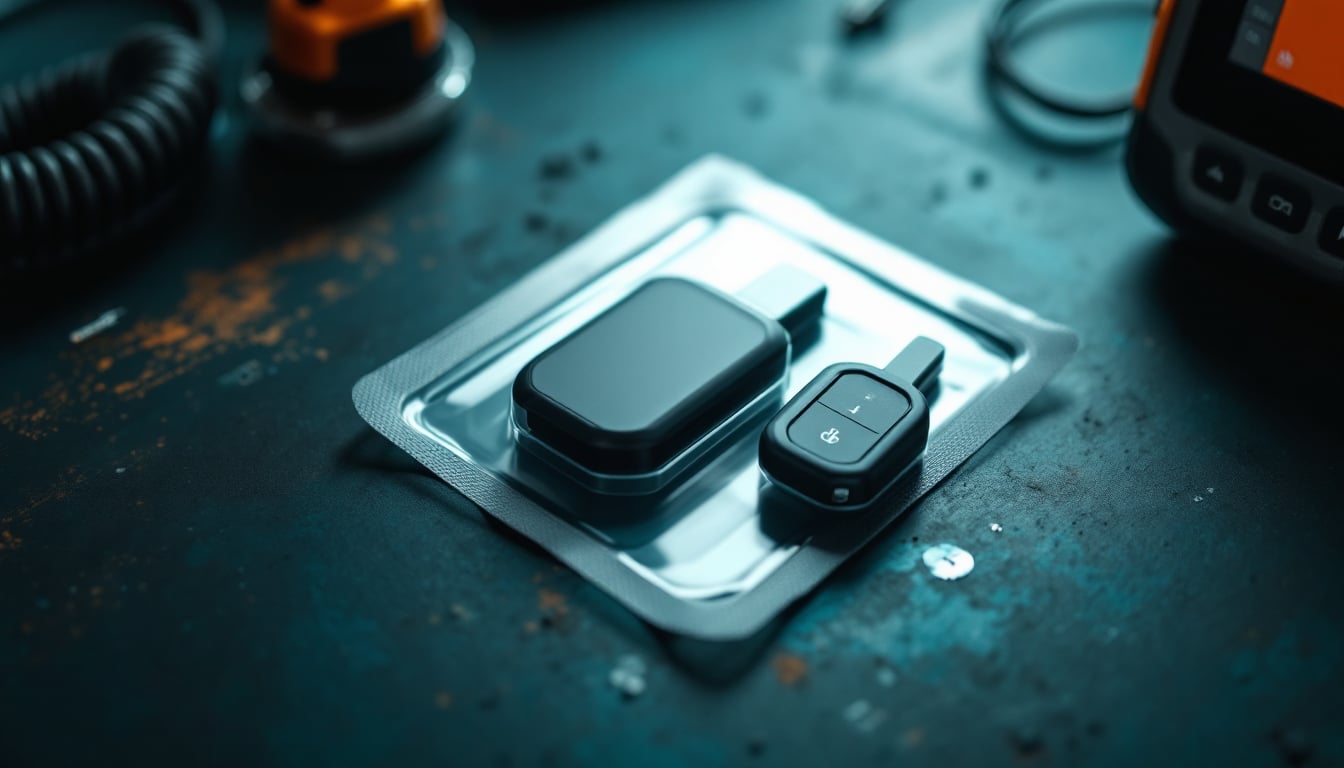
The short answer. As of September 2026, having an automotive locksmith program a fob you bought yourself is usually quoted as a flat labour-and-callout figure in the low hundreds of dollars for a mainstream vehicle — less than a supply-and-program job, but not proportionally less, because the part was never the expensive half. The equipment, the annual software subscriptions and the drive to your car cost the shop exactly the same whether you supplied the fob or they did [2]. The decision therefore turns on one question, and it is not price: can your specific part actually be paired to your specific vehicle?
KeyAtlas is an independent directory of third-party automotive locksmith businesses. It sells no keys, programs no fobs and performs no service of any kind. This guide explains how shops price owner-supplied work so that you can judge whether the online purchase is a saving or a second bill.
Why the saving is smaller than the price tag suggests
A supply-and-program quote bundles four things: the part, the cutting, the programming labour, and the trip to your vehicle. Buying your own fob removes exactly one of them — and on most vehicles it is not the largest one.
What stays on the bill regardless:
- The drive. Automotive key work is overwhelmingly mobile because the car cannot be driven to the shop. Travel is a real cost that does not shrink because your part was cheap; the full anatomy of it is in mobile car key service cost.
- The programming equipment. Diagnostic hardware plus manufacturer-specific software licences renewed annually. That overhead is spread across every job on the van.
- The technician's time. Identical work, identical duration.
- The blade cutting, if your fob includes a mechanical key that has to be cut to your locks — a separate operation from the electronics.
The result is a labour-only figure that feels high against a twenty-dollar marketplace listing and is in fact the same trade rate everyone pays. For context on what the bundled version costs, see key fob replacement cost and the comparison in smart key versus transponder pricing.
What the money looks like in practice
| Route | What you pay for | Realistic outcome |
|---|---|---|
| Shop supplies and programs | Part, cutting, labour, trip, warranty on both | Highest headline price, single point of responsibility |
| You supply a new, verified-compatible fob | Cutting, labour, trip — no part, no part warranty | Genuine saving on common vehicles |
| You supply a new fob of unconfirmed compatibility | The same labour and trip, whether or not it works | Saving if it pairs; a wasted visit fee if it does not |
| You supply a used or salvage fob | The same labour and trip | Frequently unpairable; often the most expensive route per working key |
| Dealer supplies and programs | Part at list, labour at dealer rate, usually a tow | Highest cost, and sometimes the only option |
The pattern worth absorbing: the bottom two rows cost the same to attempt as the row above them. You are not buying a discount, you are buying a probability.
Why many shops decline owner-supplied parts
It is rarely about protecting a parts margin, though that is the usual assumption. It is about who owns the failure.
When a shop supplies the fob, one business stands behind the part and the programming together. If the fob fails at four months, that is a warranty visit. When you supply the part, the shop has warranted labour on hardware it did not choose, cannot vouch for and cannot return. If a marketplace fob degrades, the customer comes back to the technician rather than to an overseas seller who has since delisted.
Shops that do accept owner-supplied parts almost always do so on stated terms: labour is billed whether or not the part cooperates, and the part carries no guarantee. That is not a shop being difficult — it is the only arrangement under which the work is offered at all. A shop that puts those terms in writing before dispatch is behaving exactly as consumer-protection guidance recommends: confirm the business, the scope and the price basis in advance [3]. The broader vetting checklist is how to verify an automotive locksmith.
The four ways an online fob fails
Understanding these makes the compatibility conversation short.
It is the wrong part that looks right. Identical shells cover different internals — different radio frequencies, different transponder families, different regional variants of the same model year. Physical resemblance proves nothing. The identifier printed on the fob is the field that actually distinguishes them, and it is searchable against the equipment-authorisation database [1]. The full compatibility method — what to check and in what order — is covered in OEM versus aftermarket car keys; this guide deliberately does not repeat it.
It is already married to another vehicle. Many smart keys write a vehicle identity on first pairing and will not accept a second one. A fob pulled from a breaker's yard can be flawless and still be electronically dead to your car. This is the single most common disappointment in owner-supplied work.
It is a clone or a counterfeit. Low-cost listings sometimes ship parts that mimic a genuine fob well enough to look correct and not well enough to pair, or that pair and then lose sync. From the technician's side this presents as a part that behaves erratically, and there is no fix but a different part.
It is genuine, compatible and new — and works. This is a real outcome and it is why the practice persists. It is most likely on common, high-volume vehicles with simple remote or transponder systems, and least likely on premium European smart keys. Where your vehicle sits on that spectrum is largely a function of its model year and technology generation: car key technology by model year is the map.
What actually gets programmed
Worth separating, because the two halves have different rules and different prices.
The remote functions — lock, unlock, panic, tailgate — are the easier half. On a narrow set of older vehicles these can be paired by an owner through a door-and-ignition sequence documented in the manual, at no cost. Where that works, it genuinely works.
The immobilizer — the transponder credential that lets the engine start — is the half that needs equipment. On most vehicles built after the mid-2000s the engine will not run without it, and on many the programming step requires a manufacturer security credential that is not issued to the public. This is why "I programmed the buttons but the car will not start" is such a common follow-up call. Transponder and smart key programming explained covers the mechanism; transponder key programming cost covers the pricing.
The three questions that prevent a wasted visit
Ask these before you buy anything, not after the fob arrives.
- "For my exact year, make, model and trim, which fob part do you need to see?" Give the VIN. Let the shop name the part rather than guessing from a listing photo.
- "If I supply that part, what is your labour figure, and is it charged if the part will not pair?" This is the single number that decides whether the plan makes sense.
- "Will you accept a new aftermarket part, or new original equipment only?" Shops differ, and knowing the rule before you order stops you buying twice.
Two of the three have nothing to do with price and everything to do with whether the appointment ends with a working key. If you would rather not run the comparison yourself, anatomy of a car key quote explains how to read what you are given.
When supplying your own part is the right call
There is a genuine case for it, and it looks like this: a common domestic or Japanese vehicle, a straightforward remote or transponder key rather than a proximity smart key, a new part rather than salvage, and a shop that has confirmed the exact part number in advance and quoted labour in writing. Under those conditions the saving is real and the risk is small.
There is an equally genuine case against it: premium European vehicles, proximity smart keys, anything where the vehicle has lost every key, and any purchase of a used fob. In all-keys-lost work the shop is originating the key from the vehicle's own data and the part has to be virgin — the scenario is set out in all keys lost car replacement and in lost car key with no spare.
One more situation deserves its own mention. If you have just bought a second-hand vehicle that came with a single key, resist the instinct to solve it with the cheapest listing you can find. That car needs a key you can rely on and, ideally, the old keys removed from the immobilizer so a previous owner's copy cannot start it — a step a marketplace fob does not perform. The reasoning is laid out in used car with one key: what to do, and the wider economics in spare car key cost and when to get one.
Where this directory fits
KeyAtlas lists independent automotive locksmith businesses across all fifty states and the District of Columbia, sourced from OpenStreetMap under the Open Database License with provenance recorded for every entry. It supplies no parts, programs nothing and takes no position on which listed business you contact — including on whether they accept owner-supplied fobs, which is each business's own policy. You can browse listed automotive locksmiths or use the matching service to reach a listed business covering your area, and ask them the three questions above before you order anything.
Frequently asked questions
How much does it cost to program a key fob I bought myself?
As of September 2026, programming-only labour for an owner-supplied fob is commonly quoted as a flat call-out-and-labour figure in the low hundreds of dollars for mainstream vehicles, rather than as an hourly rate. It is lower than a supply-and-program job because the part is removed from the bill, but it is not proportionally lower: the equipment, the software subscription and the drive to your vehicle cost the shop the same regardless of who bought the fob.
Will a locksmith program a fob I bought on Amazon or eBay?
Some will and many will not, and both positions are reasonable. A shop that declines owner-supplied parts is usually declining the warranty problem rather than the work — if a marketplace fob fails in three months, the customer returns to the shop rather than to the seller. Shops that do accept them typically quote labour as non-refundable and will not guarantee the part, which is the honest arrangement.
Do I still pay if my fob cannot be programmed?
Usually yes, at least for the visit. The technician still drove to you, still connected diagnostic equipment and still spent the time establishing that the part is incompatible, cloned, locked to another vehicle or counterfeit. Ask before dispatch what happens in that scenario — some shops credit the visit against a replacement fob they supply, some charge the trip, some charge nothing. All three are ordinary practice.
How do I know the fob I am buying will actually work?
The identifier printed on the back of the fob, together with the exact year, make, model and trim, does most of the work — and a fob that is physically identical can still carry different internals. Confirm compatibility with the shop before purchasing rather than after, because the fee for discovering the answer at the vehicle is the whole point of this article.
Is a used or second-hand fob cheaper to program?
It is cheaper to buy and frequently impossible to program. Many smart keys lock to the first vehicle they are paired with and cannot be reset by anyone outside the manufacturer network, so a fob pulled from a salvage vehicle may be unusable regardless of condition. A new, unpaired fob is the safer purchase even at a higher price.
When does buying my own fob genuinely save money?
When the part is a common, inexpensive remote or a straightforward transponder key for a mainstream vehicle, when you have confirmed compatibility with the shop in advance, and when you are buying new rather than used. On premium European smart keys the saving usually evaporates, because the parts that are cheap online are the ones most likely to be unpairable.
Can I program a key fob myself without a locksmith?
On a narrow set of older vehicles, remote-only functions can sometimes be paired through an on-board sequence described in the owner's manual, and that costs nothing. Anything involving the immobilizer — the part that lets the engine start — generally requires diagnostic equipment and, on many vehicles, a security credential that is not available to the public.
Sources cited
- Federal Communications Commission — Equipment Authorization (FCC ID) search (2025).
- AAA — Car key replacement cost guidance (2024).
- Federal Trade Commission — Hiring a Locksmith (2023).