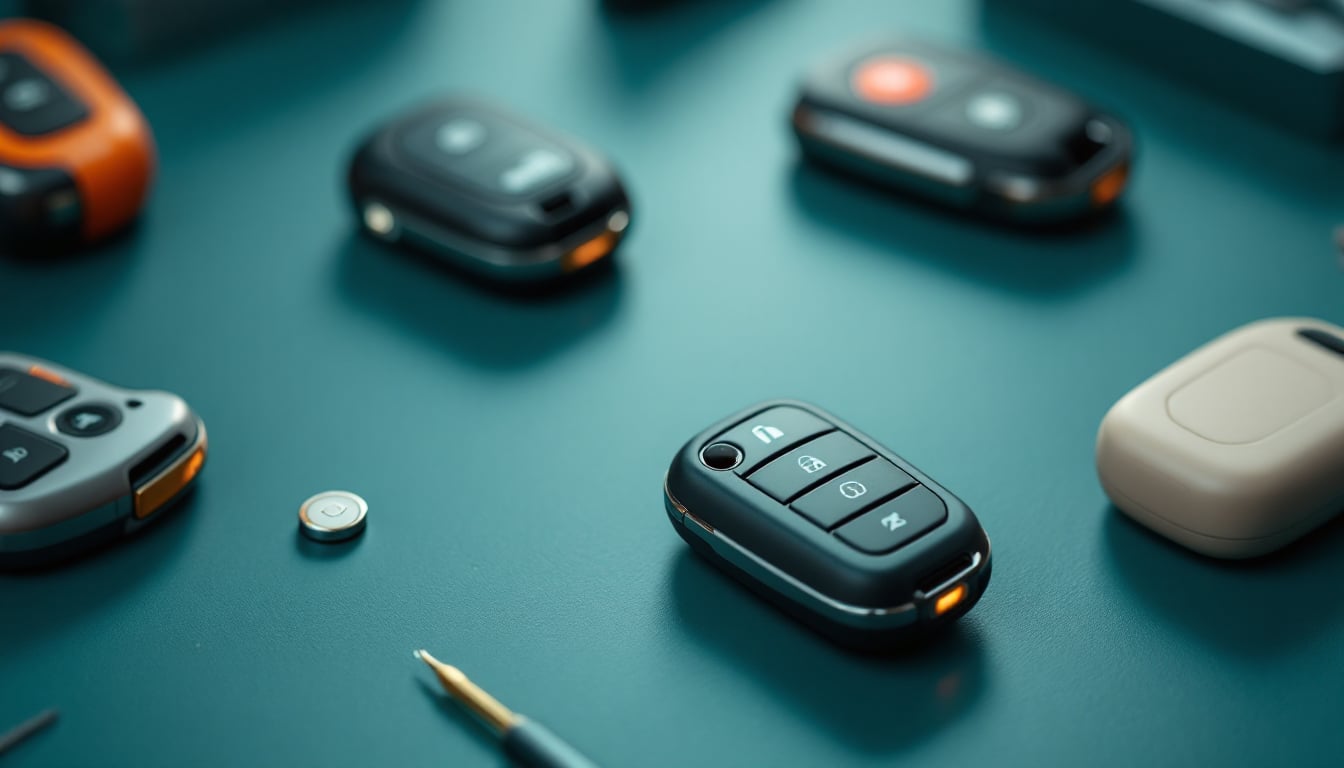
The short answer. As of August 2026, most key fob replacements land in the low-to-mid hundreds of dollars once both the hardware and the programming step are counted [1] [2]. A reprogram of a fob you already own costs far less, because there is no parts line. An all-keys-lost job on a premium platform can run into four figures. Whether you still hold one working key moves the number more than anything else.
That is the honest range, and a range is genuinely all anyone can give you without your VIN. What follows is the part most price guides skip: why the range is that wide, and how to work out where inside it your own vehicle sits before you make a call.
"Replacing a fob" is four different jobs
The phrase covers at least four transactions with different cost structures. Naming yours is the first step to reading a quote intelligently.
1. A battery and nothing else. The fob is fine; the coin cell is flat. This is a parts-counter purchase and a two-minute job, and no legitimate shop should be selling you a fob before ruling it out. The key fob troubleshooting flow walks the cheapest-first order.
2. A reprogram of hardware you already own. The fob is physically intact but the vehicle has stopped recognising it — a common outcome after a flat vehicle battery, a body-control or immobilizer module replacement, or a previous all-keys-lost visit that wiped the vehicle's key table. There is no parts line here at all; you are buying tool time.
3. An additional fob while you still have a working key. The standard case. Hardware plus programming, with the vehicle in a cooperative state because it can already be started and its security system unlocked through the existing key.
4. All keys lost. No working key exists. The technician has to establish trust with the immobilizer from nothing, which on many modern vehicles means credentialed access to manufacturer security data through the Secure Data Release System operated by the National Automotive Service Task Force [3], plus considerably more time on site. This is the tier that produces the four-figure quotes people repeat in disbelief. If it describes you, the all-keys-lost playbook is the more useful page.
| The job | What it includes | Relative cost tier |
|---|---|---|
| Coin-cell battery only | The cell, and a competent check that it is the actual fault | Lowest — a parts-counter transaction |
| Reprogram existing fob | Tool time and the programming session; no hardware | Low — labour only |
| Add a fob, working key present | Fob hardware, any blade cutting, programming session | Mid — the common case |
| Remote-head key, working key present | Combined blade-and-electronics unit, cutting, programming | Mid, trending higher on newer platforms |
| Proximity fob, working key present | Proximity hardware, emergency blade cut, programming | Mid to high, brand dependent |
| All keys lost, any key type | Extended on-site time, security-data access, sometimes towing | Highest — can reach four figures |
Tiers are relative to each other, not to a fixed price list. A high-tier job on a mainstream brand can undercut a mid-tier job on a low-volume import, which is the pattern the cost-by-make guide maps out in detail.
Why the hardware costs what it does
A plain mechanical copy is a commodity blank and a few minutes on a cutting machine — genuinely a pocket-change transaction in the era before immobilizers. A fob is a different object. It contains a battery-powered radio transmitter, usually an immobilizer transponder, and on proximity systems a low-frequency receiver so the vehicle can locate it in and around the cabin.
Two forces then set the price of that object. The first is production volume: a fob shared across millions of vehicles over a long model run is cheap to source, while one specific to a low-volume platform launched two years ago is not. The second is the parts channel. Some manufacturers keep proximity fobs on an OEM-only footing, and where the aftermarket has no equivalent, the shop is buying at dealer parts pricing and passing that through.
Neither force has anything to do with how the fob feels in your hand, which is why two fobs that look nearly identical can differ several-fold in cost.
Why programming is a separate line — and not padding
Every replacement key on a vehicle with an engine immobilizer has to be electronically accepted before it will start anything. Immobilizers became effectively universal under the federal theft-prevention framework [4], and the acceptance step is what stands between a fob and a very expensive plastic remote.
Buying that step means buying three things at once. Diagnostic hardware and the software subscriptions that keep it current, which are recurring costs to the shop rather than one-off purchases. Vehicle-specific know-how, since the procedure differs by platform and generation. And, on a growing share of vehicles, authorization: where a manufacturer routes new-key registration through an authenticated online session, an independent shop needs credentialed access, most commonly through the Secure Data Release System [3]. Where that access is unavailable, the job returns to a franchised dealer and dealer economics apply — a situation the dealer can't make that key anymore discussion looks at from the opposite direction.
This is also why the technician can appear to be doing very little for several minutes. The billable work is the tooling, the access and the knowledge, not the visible motion.
The three channels, and what each is good at
Franchised dealer. Certain access to the manufacturer's procedure, and the only realistic route on a small number of restricted platforms. The trade-offs are structural rather than a matter of goodwill: the vehicle usually has to come to them, which means a tow when no key works, and parts may be ordered rather than stocked.
Independent automotive locksmith. Mobile, so the vehicle stays where it is, and generally the cheaper route for mainstream vehicles. The variable is coverage — not every shop holds tooling for every brand and generation, which is the whole subject of why key coverage varies between locksmiths. Ask about your specific year and model before dispatch, not on arrival.
Do-it-yourself. A narrow but real category. Some older vehicles accept an onboard programming sequence with two working keys present, and a plain remote with no transponder can occasionally be paired at home. Outside those cases, the tooling required is priced for professional use.
Whichever channel you use, the Federal Trade Commission's guidance on hiring a locksmith is the sensible baseline for vetting whoever turns up: confirm the business identity, get the price before work begins, and be wary of a quote that changes on the driveway [6]. The how to verify an automotive locksmith guide expands that into a checklist.
Where fob money actually goes wrong
Three failure patterns account for most of the disappointing outcomes.
Marketplace hardware that will not take. The listing price is genuinely lower. The risk is that the part arrives uncertified, previously paired to another vehicle, or built around a chip the immobilizer rejects. Many shops will program a customer-supplied fob but will not warranty it, so a refusal on the driveway costs you the labour anyway. Ask two questions before you buy: will you program a part I supply, and what happens if it will not take? The OEM versus aftermarket comparison covers where the aftermarket is genuinely equivalent and where it is not.
Paying for a fob when you needed a reprogram. If the hardware is sound and only the pairing is gone, hardware is not the fix. A shop that tests before it sells is worth more than one that quotes fast.
Buying one when you meant to buy two. The second fob programmed in the same visit is almost always the cheapest key you will ever own, because the trip and the programming session are already paid for. Deferring it means paying both again later, and if the first fob is lost in the meantime you have moved yourself into the all-keys-lost tier. The spare key economics piece makes that arithmetic concrete.
The variables that move your number
Working key present or not. The largest single factor, and the one that can reorder every other consideration.
Key generation. A vehicle from the early transponder era and a current proximity vehicle from the same manufacturer are different jobs with different parts. The key technology by model year guide is the fastest way to place your vehicle on that timeline.
Blade cutting. Whether the job includes cutting a blade, and whether that blade is a standard edge-cut or a high-security laser cut, changes both the equipment needed and the time.
Where you are. Locksmithing is skilled local labour, tracked as its own occupation with published wage variation across states and metropolitan areas [5]. The same fob on the same vehicle can be quoted differently in two markets, and in low-density areas the drive itself becomes a real cost — the subject of car key replacement in rural areas.
When you call. Nights, weekends and holidays are priced as emergency work by most of the trade.
What a fob quote does not include
Two costs sit next to a fob replacement and are frequently confused with it.
The first is a vehicle-side fault. If the receiver or antenna module that listens for the fob has failed, a new fob changes nothing, and the diagnosis belongs with a shop that can test the vehicle rather than with a parts sale. The tell is usually that a second, known-good key behaves identically. Working through is it the key or the ignition before you buy hardware is the cheapest half-hour in this entire subject.
The second is timing. A replacement arranged for next Tuesday and the same replacement arranged at eleven at night are priced differently everywhere in the trade, because the second one is emergency dispatch — the reasoning is laid out in the guide to after-hours key replacement. If the vehicle is drivable and you are not stranded, waiting for business hours is a real lever on the total.
Who might pay some of it for you
Before assuming the cost is entirely yours, check three places. A new vehicle still inside its factory warranty period may have the fob covered as a defective part, though loss and damage are excluded almost universally. Some auto insurance policies, roadside-assistance memberships and credit-card benefit programmes include a key-replacement allowance, occasionally with a per-year cap. And a leased or fleet vehicle usually has a defined process that must be followed for the cost to be reimbursed at all — the rental, lease and fleet guide sets out who authorises what.
None of these is common enough to count on, and all of them typically want an itemised invoice from a legitimate business rather than a handwritten total. That is one more argument for insisting on a written quote up front. The insurance coverage question gets a fuller treatment of its own.
Turning a range into a number
Four facts convert an estimate into a quote: year, make and model; the VIN; whether a working key exists; and whether you need a blade cut. Give all four up front and ask for the total, delivered before dispatch, including the trip.
Then ask the two questions that separate a firm quote from an opening bid. Is this the price on the driveway, or does anything get added on arrival? And is the fob new, or refurbished and previously paired? A shop that answers both plainly is the one to book. If a quote you have already received reads as a jumble of unexplained lines, the anatomy of a car key quote breaks a typical one apart line by line.
You can start from geography instead: browse automotive locksmiths by state and city to see who covers your area, then call two of them with the same four facts and compare like for like.
Frequently asked questions
How much does a key fob replacement typically cost?
As of August 2026, published consumer guidance puts most key fob replacements in the low-to-mid hundreds of dollars once the hardware and the programming step are both counted. A simple remote reprogram on an existing fob sits well below that, and an all-keys-lost job on a premium platform can reach four figures. The single biggest swing is whether you still have one working key.
Why does a fob cost so much more than a metal key copy?
A mechanical copy is a few minutes of cutting on a commodity blank. A fob is a radio transmitter and, on most vehicles, an immobilizer transponder as well, so it carries real hardware cost and it has to be electronically accepted by the vehicle before it will start the engine. That acceptance step needs equipment, software subscriptions and, on some platforms, credentialed manufacturer access.
Can I just buy a fob online and have someone program it?
Sometimes, and it is worth asking before you buy rather than after. Many shops will program a customer-supplied part but will not warranty it, and a meaningful share of marketplace fobs arrive uncertified, already paired to another vehicle, or built around a chip the vehicle will not accept. If it fails on the driveway you have usually spent the programming labour anyway.
Is reprogramming cheaper than replacing?
Considerably, when reprogramming is genuinely the fix. If the fob is physically sound and only lost its pairing — commonly after a flat vehicle battery or a module replacement — the job is labour only, with no parts line at all. A shop should be willing to test that before selling you hardware.
Does the dealer or an independent automotive locksmith cost less?
For most mainstream vehicles an independent automotive locksmith is the cheaper route, largely because they come to the vehicle and there is no tow or parts-order wait. A minority of late-model platforms still route back to a franchised dealer because programming authorization is restricted. Comparing two quotes is the fastest way to find out which case you are in.
Do I need a new blade cut as well as the fob?
It depends on the design. On a push-to-start vehicle the fob usually contains an emergency blade that has to be cut to your locks, which adds a cutting line. On a remote-head key the blade and the electronics are a single unit, so the cut is unavoidable. A separate plain remote with no blade skips that line entirely.
How do I get a firm number instead of a range?
Give the shop the year, make and model, the VIN, and whether you still have a key that starts the car. With those four facts a competent automotive locksmith can identify the exact key type, confirm whether they hold the tooling for it, and quote a flat price before dispatch rather than an estimate on arrival.
Sources cited
- AAA — Car key replacement cost guidance (2024).
- Consumer Reports — Key fob and car key replacement guidance (2024).
- National Automotive Service Task Force — Secure Data Release System & Vehicle Security Professional registry (2024).
- NHTSA — Vehicle theft prevention and the federal theft-prevention standard (2024).
- U.S. Bureau of Labor Statistics — Occupational Employment and Wages: Locksmiths and Safe Repairers (49-3071) (2024).
- Federal Trade Commission — Hiring a Locksmith (2023).