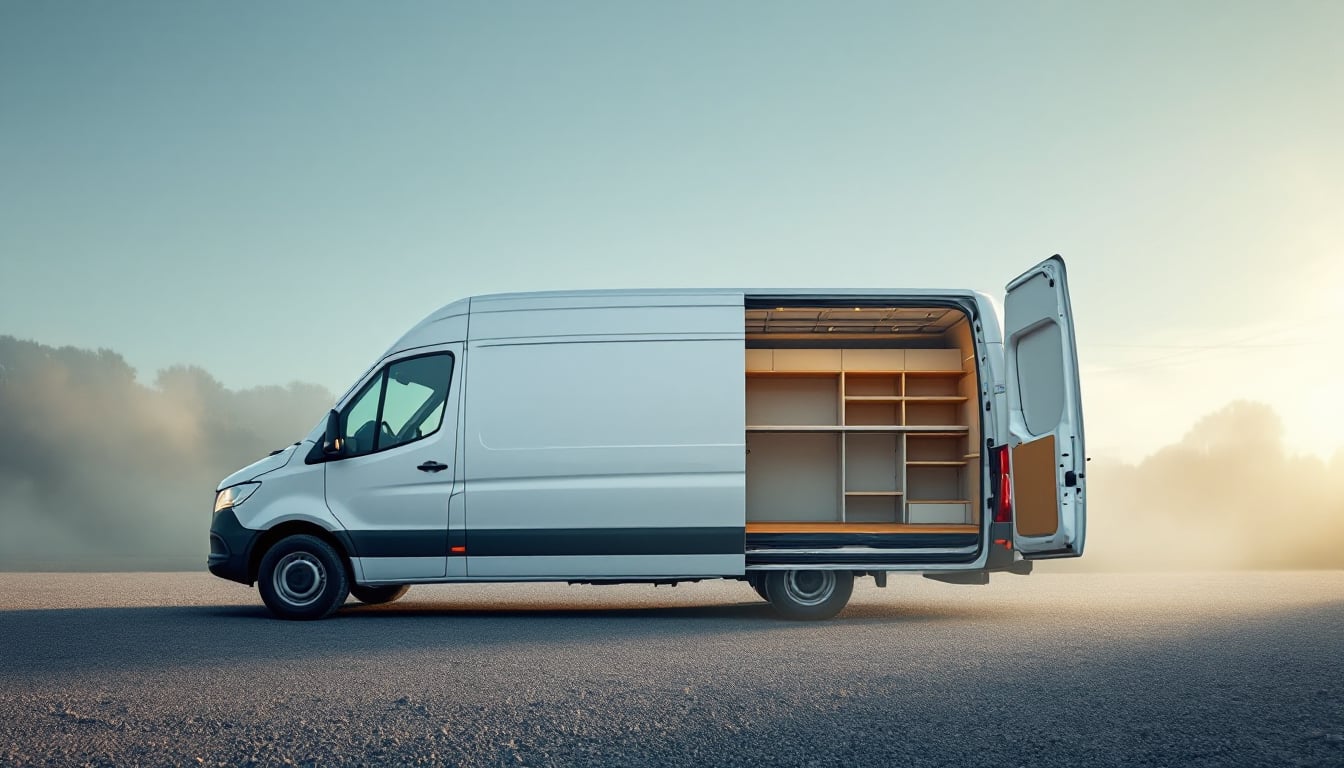
The short answer. As of September 2026, a commercial van is usually keyed like the passenger vehicles from the same manufacturer, so the part and the programming sit in familiar territory — a Transit behaves like a Ford, an Express like a GM product, a ProMaster like its Stellantis relatives [3]. What changes when the vehicle earns money is everything around the key: a day off the road usually costs more than the key did, the paperwork gains an authorisation step because the registered owner is a company rather than a person, and a missing key is a security question about who can start the vehicle rather than a lost-property one.
KeyAtlas is an independent directory of third-party automotive locksmith businesses. It cuts no keys, programs no immobilizers and dispatches nobody. This guide covers what is different about commercial vehicles so that a small fleet can plan rather than react.
Which platform your van actually inherits
The single most useful fact about van keys is that vans are rarely their own species. Each one sits on the key architecture of a passenger range, and that tells you most of what the job will involve.
| Van or work vehicle | Key platform it follows | Practical implication |
|---|---|---|
| Ford Transit, Transit Connect, E-Series | Ford passenger systems | Widely covered by independent shops; see the Ford guide |
| Chevrolet Express, GMC Savana | GM passenger systems | Long-running platforms, generally well covered; see the GM key replacement guide |
| Ram ProMaster, ProMaster City | Stellantis systems | Follows the Jeep, Dodge and Ram family |
| Mercedes-Benz Sprinter, Metris | Mercedes passenger systems | The most tightly controlled of the common vans; see the Mercedes-Benz guide |
| Nissan NV family | Nissan passenger systems | Follows the Nissan and Infiniti pattern |
| Work pickups (F-Series, Silverado, Ram, Tundra) | The manufacturer's passenger trucks | Trim matters: a base work truck and a loaded crew cab can use different key technology |
That last row is worth dwelling on. Fleet-specification pickups are often ordered in base trim, which frequently means a simpler key than the same model year in a consumer trim — sometimes a plain transponder blade where the retail version has a proximity smart key. That usually works in your favour on price and on same-day availability, and it is a reason not to assume a quote you were given for a personal vehicle applies to the work truck parked next to it. Where a given model year sits technologically is set out in car key technology by model year.
Why downtime is the real number
For a private car, the key is the cost. For a working vehicle it usually is not, and quoting the job on the key alone leads fleets to the wrong decision.
A van that cannot start does not only lose its own day. It loses the jobs booked into that day, the tools locked inside it, and often a second person's time spent shuttling equipment into another vehicle. Against that, the difference between a same-day mobile visit and a cheaper appointment on Thursday is rarely a saving at all.
Three consequences follow for anyone running vehicles:
- Mobile service is not a premium, it is the point. The van cannot be driven to a shop, and towing a loaded work vehicle adds cost and risk. The economics of the callout are in mobile car key service cost.
- Speed is worth paying a little for. The calculation that makes waiting sensible for a household second car rarely survives contact with a commercial day rate.
- Prevention is dramatically cheaper than response. Which is the next section.
Spare keys, and the arithmetic that makes them obvious
A spare cut during a planned visit is among the cheapest line items a fleet ever buys. An all-keys-lost job on the same vehicle, at short notice, with the van stranded at a customer site, is a different order of expense — and the difference is not mainly the part, it is the originating work and the urgency. The general case is argued in spare car key cost and when to get one; on commercial vehicles it is simply stronger.
The policy most small fleets converge on is two keys per vehicle: one in service with the driver, one held centrally and never carried in the same bag, van or key safe as the first. The second key is not a convenience, it is the thing that keeps a lost key from becoming a lost day.
There is a good moment to do it, too. If a technician is already on site for one vehicle, additional keys cut during the same visit avoid a second trip charge entirely. Fleets that batch this — keying several vehicles in one scheduled visit — get the best price per key they will ever see.
Key control, drivers and turnover
This is the part most guides to car keys never have to cover, and it is where fleets get caught.
A key issued to a driver is a credential that starts a vehicle. When a driver leaves, is dismissed, or simply cannot account for a key, the vehicle is startable by whoever holds it. The correct response is the same technical operation as an all-keys-lost job even though a working key still exists: the missing key is erased from the immobilizer and new keys are programmed, so the old one becomes inert. Property-crime prevention guidance treats control of keys as basic exposure management for exactly this reason [2].
Three habits make that manageable rather than alarming:
- Log which key is with which vehicle and which driver. A one-line record per key. Without it you cannot answer the only question that matters when a key goes missing.
- Keep the central spare central. A spare stored in the van it opens is not a spare.
- Make key return part of offboarding, alongside the fuel card and the building fob.
The same reasoning applies to a second-hand van bought with a single key from a previous operator — you have no idea how many keys exist for it. That situation is exactly the one covered in used car with one key: what to do, and on a commercial vehicle carrying tools it is worth resolving in the first week of ownership.
The authorisation step
Company vehicles add a layer that private vehicles do not, and it is the most common cause of a wasted visit on commercial work. No reputable shop programs a key without establishing that the person requesting it is entitled to have one.
For a vehicle registered to a business, that generally means:
- Registration or title in the company name.
- Photo identification for the person at the vehicle.
- Where that person is not an officer or owner, a signed authorisation from the business — on letterhead, naming the vehicle and the person.
- For leased or financed vans, the lienholder's consent, which is a step that runs on a third party's schedule.
Fleets that keep a standing authorisation letter in each vehicle's file resolve this in minutes rather than hours. The wider paperwork picture is in proof of ownership for car key replacement, and the leasing and fleet-specific version in rental, lease and fleet car key replacement.
Coverage: the question to ask before you need the answer
Independent shops do not cover every vehicle equally, and vans expose that more than cars do because a small fleet often contains one outlier. A yard of domestic vans plus a single European-platform van is a common shape, and the outlier is the one that will strand you.
Premium European vans use the parent brand's tightly controlled security systems. Some model years are handled routinely by well-equipped independents through the registered security-professional channel; others are handled inside the manufacturer network [1]. Both are ordinary, and a shop that tells you which applies to your van is giving you something useful. Why this varies at all is explained in why locksmith key coverage varies.
The move worth making is to ask now rather than at a roadside. One call, with your VIN list, establishes for each vehicle: whether the shop carries the blank, whether programming needs a manufacturer security request, and whether any van in the fleet has to go to a dealer. A fleet that knows this in advance can pre-stock a spare for the awkward vehicle and stop worrying about it.
When every key to a van is gone
If it happens, the sequence is the ordinary all-keys-lost process with commercial paperwork attached: the technician originates a key from the vehicle's own data, programs it, and on most vehicles erases the lost keys from the immobilizer so a found key cannot start the van. The full process is in all keys lost car replacement.
Two commercial-specific points. Have someone with authority reachable by phone, because the authorisation question will come up and an unreachable owner stops the job. And think about where the van is: a loaded work vehicle stranded in a public car park overnight is a different risk from a car, and getting it keyed before dark may be worth the same-day premium on its own.
Where this directory fits
KeyAtlas lists independent automotive locksmith businesses across all fifty states and the District of Columbia, sourced from OpenStreetMap under the Open Database License with provenance recorded for every entry. It performs no key services of any kind, holds no fleet contracts and takes no position on which listed business you contact. If you are building a fleet key plan, you can browse listed automotive locksmiths or use the matching service to reach a listed business covering the areas your vehicles work in.
Frequently asked questions
Is a commercial van key more expensive than a car key?
Usually not by much, because most vans inherit the key and immobilizer platform of the manufacturer's passenger range — a Transit key behaves like a Ford key, an Express key like a GM key. The exception is the premium European end of the market, where van keys follow the parent brand's more complex systems and cost accordingly. What genuinely separates commercial work from private work is downtime rather than the part.
Can a locksmith make a key for a Sprinter or other European van?
Coverage varies by shop and by model year, and this is the one van family where it is worth asking before assuming. The premium European platforms use tightly controlled security systems, and some model years are handled inside the manufacturer network rather than by independent shops. Any competent shop will tell you honestly which side of that line your van falls on, and being told no is useful information rather than a brush-off.
Can all my fleet vans use the same key?
Not for starting. The transponder credential that lets an engine run is unique to each vehicle, so one key cannot start two immobilizer-equipped vans — that constraint is deliberate anti-theft design. What can sometimes be standardised across a fleet is mechanical locks that sit outside the immobilizer, such as certain cargo and bulkhead locks, and that is a question for a shop with the specific vehicles in front of it.
What paperwork does a company vehicle need for key replacement?
Proof that the business owns or leases the vehicle, plus authorisation for the person standing at it. In practice that is registration or title in the company name, photo identification for the person present, and a signed authorisation on company letterhead if that person is not an officer of the business. Leased or financed vans may additionally need the lienholder's consent, which runs on someone else's business hours.
How quickly can a van be back on the road?
For a mainstream domestic van with a stocked blank, a mobile technician can usually key it the same day, often within a couple of hours of arriving. Vans built on premium European platforms, older or discontinued models, and any vehicle needing a manufacturer security request can take days rather than hours. Which category your fleet sits in is worth establishing before a key goes missing, not after.
Should a fleet keep spare keys for every vehicle?
It is the cheapest insurance in the category. A spare cut during a planned visit costs a fraction of an emergency all-keys-lost job, and it converts a day off the road into an inconvenience. The practical policy most small fleets settle on is two keys per vehicle — one in service, one held centrally and never carried.
What happens when a driver leaves and does not return a key?
Treat it as a security event rather than a lost-property one. An unreturned key starts the vehicle, so the sound response is to have the missing key erased from the immobilizer and new keys programmed, which is the same work as an all-keys-lost job even though a working key still exists. Fleets that log which key is with which driver can tell in minutes whether this is necessary.
Sources cited
- National Automotive Service Task Force — Secure Data Release System & Vehicle Security Professional registry (2024).
- National Insurance Crime Bureau — Vehicle theft trends and prevention resources (2024).
- AAA — Car key replacement cost guidance (2024).