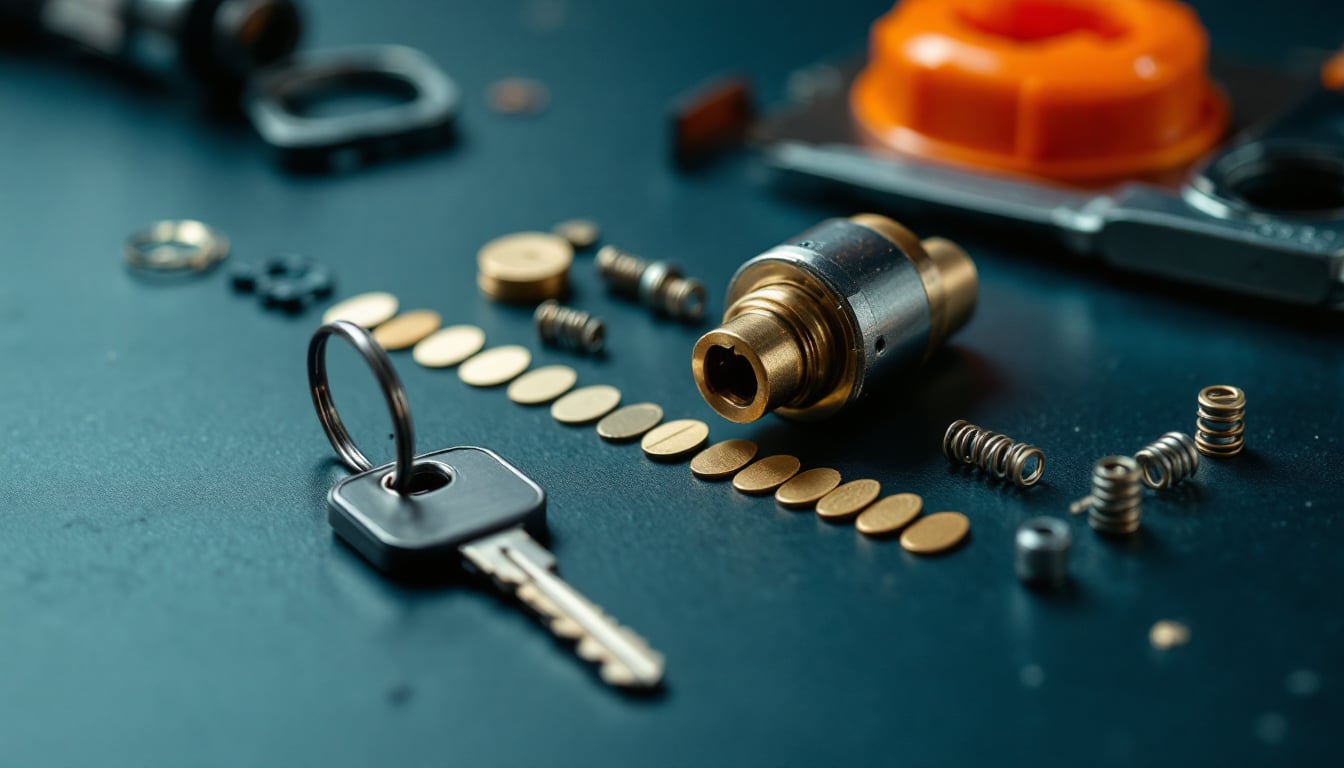
The short answer. As of October 2026, "rekeying a car" covers three differently priced jobs. Erasing a lost or stolen key from the immobilizer is electronic and is usually folded into the cost of the replacement key, which national guidance puts in the low-to-mid hundreds of dollars [1]. Mechanically rekeying is priced per lock cylinder. Replacing lock hardware is the costliest route and is rarely needed. Most owners need only the first.
KeyAtlas is an independent directory of third-party automotive locksmith businesses. It rekeys nothing, cuts no keys and quotes no prices. What follows is a national reference to how the trade prices this work, written so that the quote you eventually receive from a business makes sense line by line.
Three jobs that share one word
The confusion around rekeying costs starts with vocabulary. A homeowner who has a house rekeyed gets one well-defined service. A driver who asks for the same thing may be asking for any of three.
Erasing keys from the immobilizer. Every vehicle with a chipped key or a proximity fob keeps a list of the keys it will accept. Removing a lost key from that list is a software step carried out through the diagnostic port. Once it is done, the missing key can no longer start the engine. This is the electronic meaning of rekeying, and on most vehicles it happens automatically when an all-keys-lost job is programmed, because the system is cleared and the new keys are registered fresh. How that session works is covered in transponder and smart key programming, explained.
Recombining the lock cylinders. A car door lock, a trunk lock and a conventional ignition are mechanical. Inside each is a stack of small flat wafers whose heights correspond to the cuts of the key. Rekeying in the mechanical sense means taking the cylinder out, rearranging or swapping those wafers to match a different cut, and refitting it. Afterwards the old key no longer turns the lock, even though the lock itself is the same part that was there before.
Replacing the locks. The third job is not rekeying at all, though it is often sold under the name. New cylinders, or a complete lock set coded together, are bought and fitted. This is how a franchised dealer typically approaches the problem, because the parts system supplies locks rather than loose wafers.
The three are not steps of one process. They solve different problems, and paying for the third when the first would have done is the most common way this job becomes expensive.
What each job costs, as national bands
KeyAtlas publishes bands rather than figures, because a number that is right in one metro is wrong in the next and no directory can quote on behalf of a business it lists. The table sets the three jobs against each other so the relative sizes are clear.
| Job | What is actually done | Relative cost | Typical visit |
|---|---|---|---|
| Erase keys electronically | Lost keys removed from immobilizer memory during programming | Usually included with the new key, or a small add-on | Minutes, once the session is open |
| Rekey one door cylinder | Cylinder removed, wafers recombined, refitted | A modest add-on to a key visit | Under an hour on most vehicles |
| Rekey the ignition | Ignition cylinder removed and recombined | The largest single mechanical line | Varies widely by model |
| Rekey the whole vehicle | Doors, trunk and ignition matched to one new cut | Several cylinders of labour plus new keys | Roughly a half day |
| Replace the lock set | New coded cylinders bought and fitted | Highest: parts and labour together | Often a return visit after parts arrive |
Two readings of that table matter. First, the electronic row is the only one most lost-key situations require, and it is close to free once someone is already programming a key. Second, the mechanical rows scale with the number of cylinders, so the first question on any rekey call is simply how many locks the vehicle has and how many of them you care about. Many modern vehicles have one external door cylinder and no keyed trunk at all, which makes the "whole car" a much shorter list than it was twenty years ago.
For the price of the key itself, which sits underneath every row, see car key replacement cost by key type and the line-by-line breakdown in anatomy of a car key quote.
What changes the price
The band a particular vehicle lands in is decided by a short list of variables. None of them is a matter of opinion, and each can be established before anyone is dispatched.
How many cylinders. This is the largest lever. Labour is charged per lock removed and rebuilt. A vehicle with two door cylinders, a trunk lock, a glovebox lock and an ignition has five places the old key works. A recent crossover with one hidden door cylinder has one.
Whether a working key exists. An ignition cylinder is normally released by turning the key to a set position and pressing a retainer. With a working key that takes minutes. Without one, the technician has to get the cylinder to that position by other means, and the job lengthens accordingly. The same logic applies to cutting the new key: copying a pattern is quicker than originating one. Our guide to car key replacement cost with no spare explains why the absence of a working key raises nearly every line.
The lock design. A conventional edge-cut lock is straightforward to recombine. A high-security lock that takes a laser-cut, internally milled key has a different and fiddlier wafer arrangement, and fewer shops stock the parts for every make. That is one of the reasons locksmith key coverage varies from business to business.
Access to the lock. Some door cylinders come out through the edge of the door with one clip. Others sit behind the door card and the window mechanism. The difference is labour time, and it is specific to the model.
The key type that results. A rekeyed mechanical lock needs a newly cut key. If that key also carries a transponder or is the blade inside a proximity fob, the new key has to be programmed as well as cut. On an older vehicle with a plain metal key the same rekey ends with a few inexpensive blanks. The eras are laid out in car key technology by model year.
Wear and damage. A cylinder that is badly worn, corroded or was forced with a screwdriver may not be worth recombining. At that point replacing that one cylinder, and keying the replacement to the rest of the car, is the honest recommendation.
Travel and timing. The work is mobile on most vehicles, so distance and after-hours dispatch behave exactly as they do for any key job. Those two lines are explained in mobile car key service cost.
Which job your situation actually needs
Most rekey enquiries come from one of four situations, and each points at a different row of the table.
A key was lost, probably somewhere harmless. A key dropped on a hiking trail or left in a rental car in another state is not attached to your vehicle by anything a finder could use. Erasing it electronically when the replacement is programmed is sufficient for nearly everyone. The engine will not start for it, and nobody knows which car it belongs to.
Keys were stolen, and the thief can connect them to the car. A bag taken with the keys and a registration document, a burglary at home, or a key lifted at a workplace changes the picture. Vehicle theft guidance consistently lists control of keys among the basic precautions [2]. Electronic erasure deals with the engine. The door is a separate question: the blade still fits the lock, so anything left inside the vehicle is reachable. Rekeying the door cylinder or cylinders closes that. Rekeying the ignition as well is belt and braces on a vehicle whose immobilizer has already been cleared, and is mainly worth it on older vehicles with no immobilizer at all, where the ignition lock is the only thing between the key and the engine.
The ignition was replaced and now needs its own key. This is the classic two-key car. Somewhere in its history an ignition cylinder failed and was swapped for a new part without being set to the original key. The remedy is to rekey the ignition to match the doors, or the doors to match the ignition, whichever involves fewer cylinders. It is a tidy, self-contained job and usually the cheapest mechanical rekey there is. If the ignition is currently misbehaving, start with is it the key or the ignition before paying for anything.
A used vehicle arrived with an unknown key history. A car bought with a single key has, by definition, at least one key unaccounted for. Most buyers settle that electronically: have a second key made and ask for every key not physically present to be removed from memory in the same session. That sequence, and why it is the cheapest moment to act, is the subject of used car with one key: what to do.
Why erasing keys is usually enough
The immobilizer is the part of the vehicle that decides whether the engine runs, and it is indifferent to whether the lock turns. A key that has been erased can be cut perfectly and still do nothing but crank. That is why the electronic step carries most of the security value on any vehicle built since immobilizers became standard, and why insurers and theft-prevention bodies treat the immobilizer as the meaningful barrier [2].
There are two limits worth knowing. On some vehicles individual keys cannot be deleted one at a time; the system is cleared and every key you still hold is registered again, which means all of them have to be present at the appointment. And on some makes the security data needed to clear and re-register keys is released only to verified professionals through a controlled channel, the Secure Data Release System [3]. Neither is an obstacle, but both are reasons to bring every key you own and your ownership documents. What a reputable shop will ask to see is set out in proof of ownership for car key replacement.
If one of your remaining keys behaves differently from the other after the session, that is a registration detail rather than a lock fault. The pattern is explained in one key works and the other does not.
Dealer or independent locksmith
The two routes differ in method more than in competence.
A franchised dealer generally works from the parts catalogue. Locks are ordered against the vehicle identification number, arrive coded, and are fitted. The result is factory-correct, and the cost reflects new parts on every lock plus workshop labour, often with the vehicle left on site.
An independent automotive locksmith generally works on the locks already in the car. The cylinders are removed, recombined and refitted, usually at the vehicle's location and usually in one visit. Where a cylinder is past saving, the locksmith replaces that one and keys it to match. For most owners this is the less expensive route, for the simple reason that labour replaces parts.
Neither is universally right. A model whose locks are integrated with electronic modules, or whose parts are restricted, may leave the dealer as the practical choice. The general trade-offs are covered in dealer versus locksmith for a car key.
Whether insurance helps
Comprehensive coverage is the part of an auto policy that may respond to theft, and some policies add specific key or lock cover [5]. In practice the deductible decides it. A single door cylinder and an electronic erase can cost less than the deductible, in which case there is nothing to claim. A full lock set on a higher-value vehicle after a burglary is a different calculation. Ask the insurer two questions before authorising work: whether rekeying after stolen keys is covered at all, and whether the insurer requires its own approved repairer. The wider picture is in does insurance cover car key replacement.
Questions to ask on the call
A rekey quote is only comparable with another if both shops are pricing the same job. Five questions make that so.
- Which locks are included: doors, trunk, glovebox, ignition?
- Are the lost keys also being erased from the immobilizer, and is that a separate line?
- Are you recombining my existing cylinders or fitting new ones?
- How many new keys are included, and are they programmed?
- Is the figure a total, or a call-out plus work to be priced on arrival?
Consumer-protection guidance on hiring a locksmith stresses getting the price basis settled before anyone is dispatched [4]. A business that answers all five without hedging is describing a job it has done before. Our checklist for the rest of that conversation is how to verify an automotive locksmith.
Where this directory fits
KeyAtlas lists independent automotive locksmith businesses across all fifty states and the District of Columbia, sourced from OpenStreetMap under the Open Database License with provenance recorded for every entry. It performs no lock or key work and does not rank or endorse the businesses it lists. Once you know which of the three jobs you need, you can browse listed automotive locksmiths by state or use the matching service to be connected with a listed business that covers your area.
Frequently asked questions
How much does it cost to rekey a car?
As of October 2026 it depends on which of three jobs is meant. Erasing lost or stolen keys from the immobilizer during a programming visit usually adds little to the price of the new key itself, which sits in the low-to-mid hundreds of dollars for a chipped key and higher for a proximity fob. Mechanically rekeying is priced per lock cylinder, so a single door lock is a modest add-on while doors, trunk and ignition together make a half-day job. Replacing the lock hardware outright is the most expensive route and is rarely necessary.
Is rekeying cheaper than replacing the locks?
Almost always. Rekeying reuses the lock housings already in the vehicle and changes only the small wafers inside them, so the customer pays mostly for labour. Replacement means buying new cylinders or a complete coded lock set and then fitting them. Replacement is the sensible choice only when a cylinder is physically damaged, badly worn or was forced during a theft attempt.
If my keys were stolen, do I need to rekey the locks or just erase the keys?
Erasing the stolen keys from the immobilizer stops them starting the engine, and on most vehicles it is done as part of programming the replacement. It does not stop the metal blade from opening a door, because a door lock is purely mechanical. If the thief knows where the vehicle is parked or valuables are kept inside, rekeying at least the door cylinders closes that gap. Whether that is worth it is a judgment about exposure, not a technical requirement.
Can the ignition be rekeyed to match my existing door key?
Yes, on most vehicles with a conventional keyed ignition. When an ignition cylinder is replaced, an automotive locksmith can normally set the wafers in the new cylinder to the cut of the key you already carry, so one key continues to work the whole car. A parts-counter replacement fitted without that step is the usual reason an owner ends up carrying one key for the door and another for the ignition.
Does a push-button-start car need rekeying?
Mostly not in the mechanical sense. A proximity vehicle has no ignition cylinder, so the security lives in the immobilizer memory and removing a lost fob is an electronic step. The one mechanical part is the hidden emergency blade and the single door cylinder it opens. That cylinder can be rekeyed if a lost fob still carries a blade that fits it.
Will insurance pay for rekeying after a theft?
Sometimes. Comprehensive coverage may respond when keys are stolen, and some policies or add-ons include key and lock replacement specifically, but it is subject to the deductible and to the policy wording. Because a single-cylinder rekey can cost less than a typical deductible, the claim is often only worthwhile for a full lock set on a higher-value vehicle. Ask the insurer before the work is done rather than after.
How long does a car rekey take?
Erasing keys electronically takes minutes once the programming session is open. A door cylinder is commonly well under an hour including removal and refitting. An ignition cylinder takes longer and varies widely by model, and the whole vehicle done at once is realistically a half-day visit. A missing working key lengthens every one of those steps.
Sources cited
- AAA — Car key replacement cost guidance (2024).
- National Highway Traffic Safety Administration — Vehicle theft prevention (2024).
- National Automotive Service Task Force — Secure Data Release System & Vehicle Security Professional registry (2024).
- Federal Trade Commission — Hiring a Locksmith (2023).
- Insurance Information Institute — Auto insurance basics (2024).