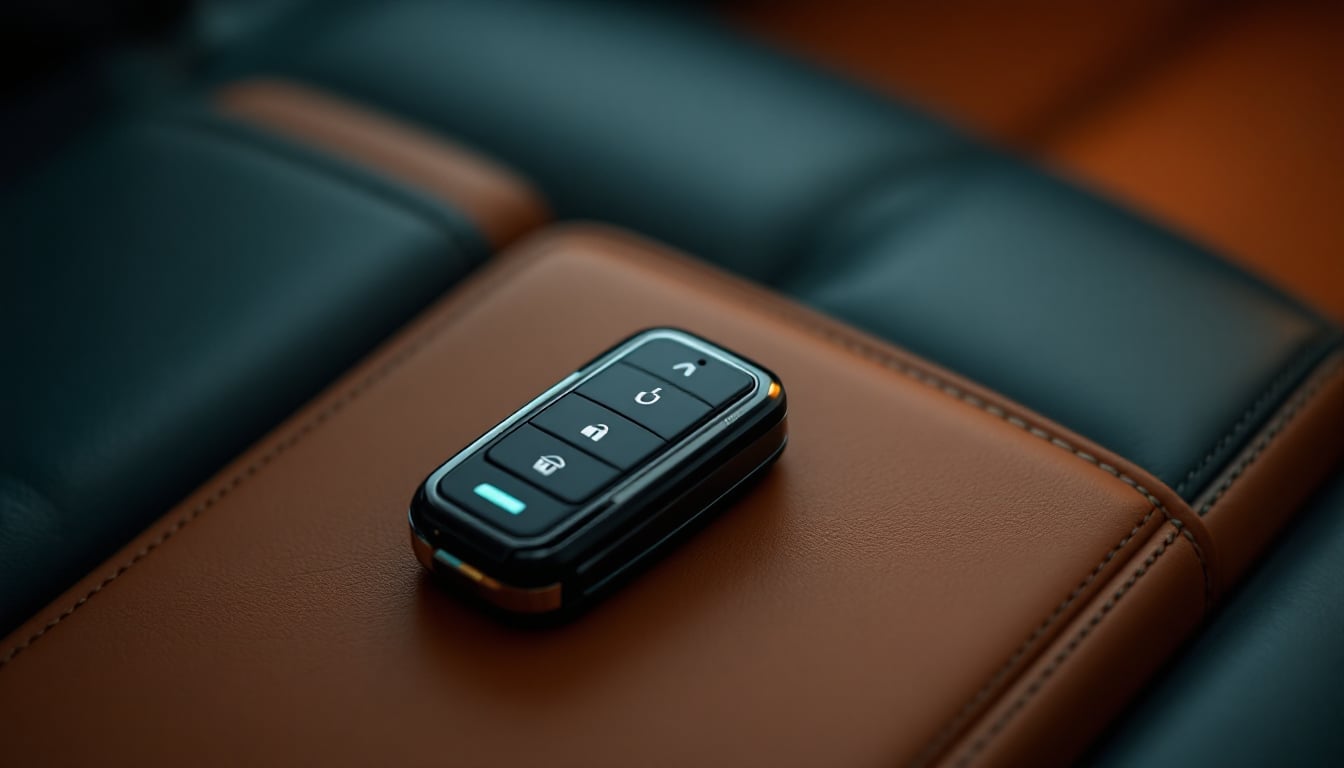
Ask an automotive locksmith about a Toyota key and the conversation is short. Ask about a Land Rover, a Jaguar or a Volvo and it gets noticeably longer, and the reason has less to do with the badge being premium than owners assume. It has to do with how many of these vehicles are on American roads, how tightly the key is tied to the car, and who is permitted to authorise a new one.
As of August 2026, these three sit in the most expensive corner of the key-replacement map for reasons that are structural rather than punitive — what changes between eras, what a legitimate shop will ask you for, and what to establish on the phone before anyone drives out.
Three badges, one set of conditions
Land Rover and Jaguar are a single company. Volvo is not, and has its own owner and its own engineering. All three passed through Ford ownership during the 2000s before being sold on, Jaguar Land Rover to Tata Motors and Volvo Cars to Geely — useful trivia, and no help in predicting a key quote.
A technician groups them in one breath because they share three conditions, and corporate parentage is not one of them.
Volume. Each sells a fraction of what a mainstream manufacturer sells in the United States, and that drives more of the price than anything else. Fewer vehicles means fewer keys produced, thinner aftermarket support, fewer technicians fluent in them, and less competitive pressure among the shops that are.
The key is bound to the vehicle, not merely coded to it. On the more recent platforms across all three brands, a key is not a chip any equipped shop can talk into cooperating. It is a credential written into a vehicle security module and associated with that specific car — deliberate anti-theft engineering that works, and that changes what a replacement job is.
Adding a key is authorised, not just performed. Where the module holds the authority, something has to grant permission before a new credential is accepted. In the United States that generally means a manufacturer diagnostic subscription or credentialed access through the recognised industry channel, where registered technicians who have verified that a vehicle belongs to the person in front of them can obtain manufacturer security information [1]. Both cost money and both require standing credentials.
Those conditions compound. The same combination pushes the German premium brands up the scale, which is why the patterns in our BMW and Mini guide and our Volkswagen and Audi guide will feel familiar. The difference is volume — a smaller installed base makes each condition bite harder.
The eras, described honestly
It is tempting to want a table of model years with clean cutoffs. Be sceptical of anyone selling one. The boundaries moved at different times for different platforms within each brand, and adjacent model years on the same nameplate can land on opposite sides, so what follows is described as eras. Which one a vehicle occupies is read from the vehicle identification number, and you can decode yours with the public federal tool before calling anyone [4].
The earlier electronic era. Bladed keys with a transponder chip, sometimes with a separate remote and sometimes with the remote in the key head. Aftermarket support is comparatively broad, more independent shops are equipped for them, and this is the closest these brands get to a routine key job.
The middle proximity era. Keyless entry and push-button start arrive across the ranges. The fob becomes the whole key, usually with a slim emergency blade concealed inside for the door. Parts cost steps up sharply and the number of shops that will quote confidently starts to narrow.
The current module-bound era. Proximity keys tied to a vehicle security module, with enrolment that commonly depends on authorised access rather than a handheld tool alone. Independent coverage narrows further, and the newest model years narrow it again while aftermarket support catches up.
Two features sit on top of that era and are worth naming without overstating. Several models have offered a wearable or activity key, a rugged band meant to be taken surfing or running while the main key stays locked in the vehicle, and some support a phone-based digital key depending on the platform and the market. Neither replaces the conventional key in the sense that matters here. They are convenience layers rather than a spare, and how a specific vehicle handles them is a question for a shop.
What that means on the invoice
The table groups by brand and era rather than nameplate, because the nameplate is the least informative thing about a key job here. Tiers are relative, on the scale used in our cost by make guide, where Tier 1 is the least expensive class of job and Tier 4 the most.
| Brand and era | Typical key technology | What the job usually involves | Relative cost tier |
|---|---|---|---|
| Volvo, earlier electronic era | Bladed transponder or remote-head key | Cut a blank, enrol with a working key present | Tier 2 |
| Land Rover or Jaguar, earlier electronic era | Bladed transponder or remote-head key | Cut and enrol, equipment dependent | Tier 2 |
| Volvo, proximity era | Proximity fob with emergency blade | Enrol to the security module, add-a-key | Tier 3 |
| Land Rover or Jaguar, proximity era | Proximity fob with emergency blade | Enrol to the module, often authorised access | Tier 3 to 4 |
| Any of the three, current module-bound era | Module-bound fob, commonly OEM supplied | Authorised enrolment, dealer routing more common | Tier 4 |
| Any of the three, no working key remaining | Originated key | Origination, ownership check, authorised enrolment | Tier 4, highest by procedure |
Published consumer guidance places modern key replacement broadly in the low-to-mid hundreds of dollars, rising for proximity systems and rising again when nothing remains, with premium low-volume platforms reaching into four figures at the worst [2] [3]. Regional labour rates move it again, because locksmithing is a skilled trade with real wage variation between states [6]. The table is for the shape: era moves the number more than the badge does, and losing every key moves it more than either.
Whether a working key survives
Every make rewards having a spare. On these three the reward is larger than average.
With a working key in hand, the job is addition. The vehicle can be persuaded to accept another credential alongside the one it already trusts, the cuts can usually be copied rather than derived, and the appointment is a manageable stretch of time.
With no working key, the job changes category. The cuts have to be derived from the vehicle, a credential enrolled into a system that recognises none, and on a module-bound vehicle that has to be authorised before anything is written. The full sequence is set out in all keys lost and the secure data release explained.
The consequence is that the pool of shops willing to take the work shrinks at exactly the moment you need it to be large. Expect a longer appointment, a firmer position on payment because the work cannot be undone, and a real chance that a call or two ends in a referral onward. A referral is worth more than an optimistic yes here, because a half-finished attempt on a module-bound car is not a neutral outcome.
That is also the argument against running on a single key indefinitely, a specific hazard for anyone buying a used car with only one key. A second key made on a weekday afternoon by a shop you chose is a different experience from an origination job arranged at the roadside.
Why the paperwork is stricter here
Owners are sometimes surprised, and occasionally offended, by how much documentation a shop wants before touching one of these vehicles. The check is not about you.
Where manufacturer security information is released to independent technicians, it is released on the condition that the technician has established that the vehicle belongs to the person requesting the work, and records that fact [1]. That is the deal that makes independent service on module-bound vehicles possible at all. A shop that skips it is either not doing the job properly or is not the shop it says it is.
Expect a photo identification document and a registration or title in your name, matched against the vehicle identification number read from the car itself. Leased, financed and company-owned vehicles have their own wrinkles worth sorting out in advance. Which documents satisfy the check, and what to do when the registration is in somebody else's name, is covered in proof of ownership for car key replacement.
Federal consumer guidance on hiring a locksmith is short and worth reading first: confirm the business name, get a firm total in advance, expect an identification check, and treat a price that changes on arrival as a reason to stop [5].
The parts channel is thinner than you are used to
On a high-volume mainstream vehicle the aftermarket produces fobs in quantity, competing manufacturers keep quality honest, and a shop can carry stock in the van. None of that is reliably true here.
On many platforms across these three brands the fob is effectively an original-equipment item, ordered rather than stocked. Aftermarket alternatives exist for some vehicles and not others, and those that exist are made in smaller numbers with less field history behind them. Two consequences: a part may have to be ordered before an appointment can be scheduled, and it is a larger share of the total than on a mainstream car.
It also makes a marketplace fob a bigger gamble than usual. A used key described as genuine is genuine, in the sense that it was genuine for somebody else — and where keys are written to one specific car, that is precisely the problem. The broader comparison, and where each option honestly makes sense, is in OEM versus aftermarket car keys. If you buy anything yourself, ask the shop that will enrol it whether it accepts customer-supplied parts, and what happens if the vehicle rejects one.
Coverage: ask about the brand and the year, not about Europe
The most useful habit for owners of these vehicles is a small one. Do not ask a shop whether it works on European cars. Ask whether it can enrol a key on this brand, this model year, this vehicle identification number, with the equipment it owns. Only the second question produces a usable answer.
Coverage between two shops in the same area can differ enormously, and it is not primarily a question of skill. The tooling is expensive, the manufacturer access is a standing cost, and a business that sees one of these vehicles a few times a year may reasonably carry neither. The economics is set out in why locksmith key coverage varies.
A shop that answers immediately and specifically has checked. One that hedges, redirects to price, or says it will work it out on arrival is one to pass on. On a mainstream vehicle an optimistic shop wastes an hour; here it wastes a trip charge and leaves the vehicle where it started.
What to establish before anyone is dispatched
Have the year, brand, model, vehicle identification number and a clear statement of whether any key still works. Then ask four things. Can you enrol a key on this vehicle with your own equipment, or does it need authorised access. Is the part in stock or must it be ordered. What documentation do you need from me. Is the figure quoted the all-in total including the trip.
If the first answer is a confident yes, the rest is an ordinary conversation. If it is a hedge, keep calling rather than booking and hoping — on this make family, the difference between a shop that covers your vehicle and one that does not is the whole outcome.
Frequently asked questions
Why does a Land Rover or Jaguar key cost more than a key for a mainstream SUV?
Three reasons stack up. The fob itself is a low-volume part with thin aftermarket support, the enrolment procedure is more involved and often requires authorised access, and fewer shops in any given area are equipped to do the work at all. None of those is a surcharge invented for you, and all three ease off on older vehicles that predate the module-bound era.
Can any automotive locksmith program a Land Rover, Jaguar or Volvo key?
No, and this is the make family where that matters most. Coverage varies sharply between businesses in the same area because the tooling and the manufacturer access are expensive and not every shop has invested in them. Ask about your exact brand, model year and vehicle identification number before booking rather than asking whether a shop handles European cars.
What paperwork will a shop ask me for on these vehicles?
Expect a photo identification document and a registration or title in your name, matched against the vehicle identification number read from the car itself. On modern vehicles that check is the basis on which manufacturer security information is released to the trade at all, so a shop that skips it is not doing you a favour.
Is a used or marketplace fob a way to save money on these brands?
It is a bigger gamble here than on mainstream vehicles. Where a key is written to one specific car it cannot generally be reassigned to another, and genuine in a listing usually means it was genuine for somebody else. Ask the shop that will enrol the key whether it will accept a part you supply, and what happens if that part is rejected.
How much worse is an all-keys-lost job on these vehicles?
Materially worse in time, cost and availability. The mechanical cuts have to be derived rather than copied, a credential has to be enrolled into a vehicle that recognises none, and your ownership has to be documented before anything is written. Expect fewer shops willing to take it and expect at least one honest referral onward.
Are Volvo keys cheaper than Land Rover and Jaguar keys?
Often somewhat, though the gap is narrower than the badges suggest and it closes on recent vehicles. All three sit below mainstream brands on production volume in the United States, which is the condition doing most of the work, and the era of the vehicle moves the number more than the brand does.
What about an activity key or a phone-based key on my vehicle?
Some models across these brands offer a wearable or activity key, and some support a phone-based digital key, depending on the platform and the market. Neither is a substitute for the conventional key from a replacement standpoint, so treat them as convenience features layered on top rather than as a spare, and ask a shop specifically how your vehicle handles them.
Sources cited
- National Automotive Service Task Force — Secure Data Release System & Vehicle Security Professional registry (2024).
- AAA — Car key replacement cost guidance (2024).
- Consumer Reports — Car maintenance and ownership-cost guidance (2024).
- National Highway Traffic Safety Administration — VIN decoder (vPIC) (2025).
- Federal Trade Commission — Hiring a Locksmith (2023).
- U.S. Bureau of Labor Statistics — Occupational employment and wages, locksmiths and safe repairers 49-3071 (2024).