The most expensive assumption in car ownership is that a car which will not respond needs a new key. As of August 2026, replacement runs broadly in the low-to-mid hundreds of dollars and rises from there for proximity systems [1], which makes it worth spending ten minutes on the cheap explanations first.
They are not exotic. In order of how often they turn out to be the answer, here are the six things to check before anyone sells you anything.
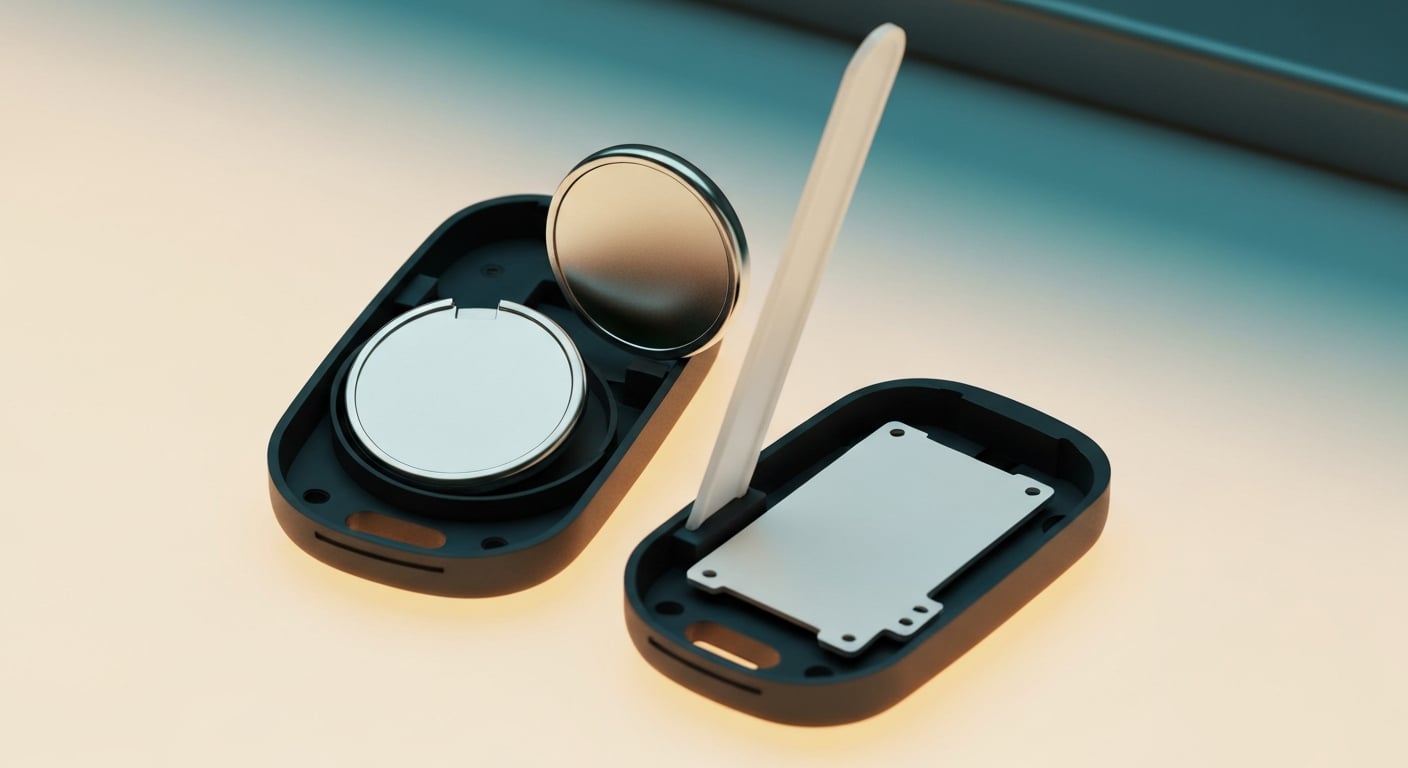
1. The coin cell battery
This is the answer more often than every other cause combined, and it is worth being systematic about rather than assuming you already checked.
The tell-tale is not usually a sudden death. It is a fob whose working range shrinks over weeks until you find yourself standing beside the door pressing harder, as though effort were the variable. When the range has collapsed to arms length, the cell is nearly done.
Three things go wrong when owners replace it. The wrong cell type, because several similar-looking sizes exist and only one fits properly. The cell inserted the wrong way round, which produces symptoms identical to a flat battery. And a cell that has sat in a drawer for years, which can arrive already half depleted. Buy a fresh one, note the number printed on the old cell, and check the orientation diagram inside the case before you close it.
If the fob works normally afterwards, you are finished, and you have saved yourself a service call.
2. The vehicle battery, not the key battery
This is the check owners skip and technicians ask about first.
A weak vehicle battery produces a cluster of symptoms that look exactly like key failure: doors that will not unlock from the fob, a dashboard that lights dimly or flickers, an engine that will not crank, and electronics behaving strangely. The key is the object in your hand, so the key gets blamed.
The distinguishing signs are on the vehicle rather than the key. Are the interior lights and dashboard illumination noticeably dim. Does anything happen at all when you press the start button. Does the vehicle click rather than crank. If the answer to any of those is yes, deal with the vehicle battery before spending anything on a key. Nothing about a new fob will help.
3. The two-fob test
If your vehicle came with two keys, this is the single most informative test available and it costs nothing.
Try the second fob. If it works perfectly, the vehicle side is healthy and the fault lives in the first fob. If the second fob behaves identically to the first, the fault is far more likely to be on the vehicle side, in the receiver, a fuse, or the battery. That one comparison eliminates half the diagnostic tree in thirty seconds.
If you only have one key, that is worth noticing as a separate problem. It means every fault becomes ambiguous, and it means a genuine failure leaves you with nothing at all. The case for closing that gap is in spare car key cost and when to get one.
4. Physical damage and water
Fobs live in pockets, get dropped on concrete, and go through washing machines. Any of those can produce an intermittent or dead unit while the battery is perfectly healthy.
Water is the least forgiving. A fob that has been submerged should be opened, dried thoroughly and left in a dry place before further judgement, and even then it may work erratically for weeks before failing for good. Impact damage typically shows as a fob that works if squeezed or held a certain way, which is a cracked internal connection.
A worn button membrane is the mildest version: one button works and another does not, or a button needs a firm press. On many fobs the shell can be replaced while the electronics inside are transferred, which is far cheaper than a new programmed key. Ask about that before agreeing to a full replacement — where it fits into the overall picture is covered in our key fob replacement guide.
5. Radio interference
If the fob works in some places and not others, nothing is broken.
Key fobs transmit at very low power. Some environments carry enough radio noise on nearby frequencies to swamp that signal, and the effect is location-specific: a car park where the fob never works, a particular office lot, a stretch near a large transmitter. The vehicle is fine, the fob is fine, and the workaround is the mechanical blade hidden inside almost every proximity fob.
You can look up the radio approval details for your fob in the public federal equipment authorization database using the identifier printed on the case [2], which is also the reliable way to check compatibility if you are ever buying a replacement.
6. Lost pairing after a battery change
Occasionally a fob stops working immediately after a battery change or after the vehicle battery has been disconnected. The most common reason is that the remote side has lost its radio pairing, which is separate from the immobilizer credential that starts the engine.
The distinguishing symptom is precise and worth remembering: the buttons do nothing, but the vehicle still starts normally when the fob is inside. That combination proves the security side is intact and the fault is confined to the remote radio. On a number of vehicles the resync is an owner-performed sequence documented in the owner literature; on others it needs a shop, but it is a short job rather than a new key.
Reading the pattern
| What you observe | Most likely cause | Cheapest first move |
|---|---|---|
| Range shrinking over weeks | Fob battery depleting | Fresh coin cell of the correct type |
| No response at all, dash dim, no crank | Vehicle battery | Test or replace the vehicle battery |
| Second fob works, yours does not | Fault inside your fob | Battery, then shell or repair, then replacement |
| Both fobs fail identically | Vehicle side | Fuse and receiver check at a shop |
| Buttons dead but the car starts | Remote pairing or button membrane | Resync procedure or shell replacement |
| Works in some locations only | Radio interference | Nothing is broken; use the blade or handle |
| Car recognises nothing, battery healthy | Fob electronics or immobilizer fault | Diagnosis before purchase |
The value of that table is not the diagnosis so much as the order. Every row above the last one is cheaper than a replacement key, and several are free.
The backup start position
Worth learning before you need it: most push-button vehicles have a defined way to start with a fob whose battery has died.
The usual arrangements are holding the fob against a marked spot on the steering column, pressing the start button with the fob itself rather than a finger, or placing the fob in a slot or pocket inside the console. The vehicle can then read the credential at very close range without relying on the radio.
Manufacturers document this in the owner literature, and it takes two minutes to find. Knowing it converts a dead fob battery from a stranding into an inconvenience, which is the difference between an overnight call-out and a stop at a hardware shop in the morning.
When it really is the key
Three findings point past the cheap explanations. A known-good second fob works while yours does not, after a fresh battery. The fob has been through water or a serious impact. Or the vehicle recognises nothing at all with a healthy vehicle battery and no second key to test against.
At that point you are buying a key rather than troubleshooting one, and the relevant questions change: the format, whether a working key survives, and whether the shop can enrol it on your specific vehicle. If no working key exists, the job moves into the origination category described in all keys lost and the secure data release explained, and a legitimate shop will verify that the vehicle is yours before it writes anything [4].
Get a firm total before anyone attends, including the trip charge, and treat a price that changes on arrival as a reason to stop. Federal consumer guidance on hiring a locksmith makes the same recommendation [3], and the full checklist is in how to verify an automotive locksmith with the quote breakdown in anatomy of a car key quote.
What a shop can check that you cannot
Two tests separate a genuinely dead fob from a healthy one, and neither is available at home.
The first is whether the fob is transmitting at all. A technician can check for the radio signal directly, which settles the battery-versus-electronics question in seconds rather than by substitution. The second is whether the vehicle is receiving. Reading the vehicle side shows whether the receiver module is awake and whether the vehicle is registering any attempt from your key.
Those two answers between them place the fault on one side or the other, and they are worth paying a diagnostic fee for before paying for a key. A shop that offers to test before it sells is demonstrating something useful about how it operates, and it is a reasonable thing to ask for when you call: can you check whether the fob is transmitting before we talk about replacing it.
One symptom that deserves its own diagnosis
If the fob is clearly being recognised — the doors unlock, the dashboard lights, the vehicle acknowledges you — but the engine will not start, do not assume the key.
That pattern points toward the vehicle rather than the credential, and on push-button vehicles a failed electronic steering column lock is a well-known cause that mimics key failure closely. Buying a key will not resolve it. The triage for telling those apart is in is it the key or the ignition.
Frequently asked questions
My key fob suddenly stopped working. What is the most likely cause?
A depleted coin cell battery, by a wide margin. It is the cheapest part in the whole system and the only one that wears out on a predictable schedule. Before considering anything else, fit a fresh battery of the correct type and check that it is seated the right way round, because a reversed cell produces exactly the same symptoms as a flat one.
The fob only works when I am standing right next to the car. Why?
That is the classic signature of a battery on its way out rather than one that has failed outright. Transmission range collapses before the fob stops entirely, so the working distance shrinks over weeks. It is a warning worth acting on, because the next stage is no response at all, usually at an inconvenient moment.
My car will not start and the dash is dim. Is the fob the problem?
Probably not. A weak or dead vehicle battery produces dim lights, slow or no cranking and erratic electronics, and owners often blame the key because that is the thing in their hand. Check the vehicle battery first, because replacing a fob will not fix it and the symptoms overlap almost completely.
Is there a way to start a push-button car with a dead fob?
Most push-button vehicles have a backup method, commonly holding the fob against a marked spot on the steering column, the start button itself, or a slot in the console so the vehicle can read the credential at close range. The exact method varies by manufacturer and is documented in the owner literature. It is worth learning before you need it.
My fob works at home but not at work. What is going on?
That points to radio interference rather than a fault. Some locations carry enough radio noise to swamp a low-power key fob signal, and multi-storey car parks and areas near large transmitters are common culprits. If the fob behaves normally elsewhere, nothing is broken and the mechanical key or door handle is the workaround.
When is it actually the key rather than something cheaper?
When a known-good second fob works and yours does not, when the fob has been through water or a hard impact, or when the vehicle recognises nothing at all despite a healthy vehicle battery. Those cases point to the key itself. Everything before them is worth ruling out first because the cost difference is substantial.
Sources cited
- AAA — Car key replacement cost guidance (2024).
- Federal Communications Commission — Equipment Authorization (FCC ID) search (2025).
- Federal Trade Commission — Hiring a Locksmith (2023).
- National Automotive Service Task Force — Secure Data Release System & Vehicle Security Professional registry (2024).