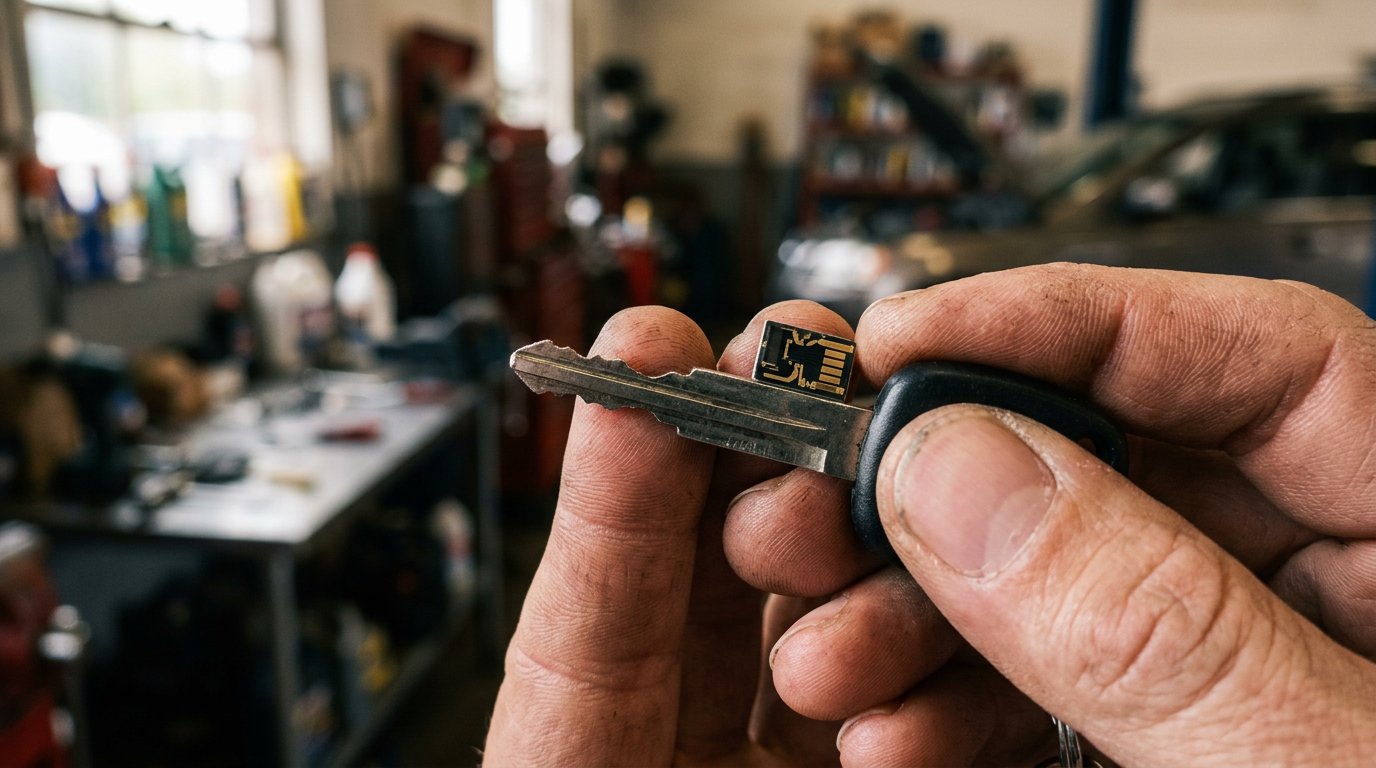
Modern vehicles equipped with push-button ignition systems require specialized key fobs that communicate wirelessly with the car's immobilizer and starting system. When these advanced keys are lost, damaged, or stop functioning, owners face a replacement process that differs significantly from traditional metal key duplication. KeyAtlas is an independent directory that lists automotive locksmith businesses across the country—we do not perform key replacement services ourselves, but provide information to help vehicle owners understand their options and connect with qualified professionals.
This guide explains how push to start key replacement works, what factors influence cost, and how to choose between dealership service and independent automotive locksmiths for this specialized work.
Quick Answer: Push to Start Key Replacement Overview
Push to start key replacement typically requires three distinct steps: cutting a physical emergency blade (if applicable), programming a new transponder chip to the vehicle's immobilizer system, and pairing the key fob's radio-frequency identification (RFID) module with the push-button starter. According to NASTF, the majority of vehicles manufactured after 2010 use encrypted rolling-code systems that require access to manufacturer security protocols. Independent automotive locksmiths can usually complete push to start key replacement in 45-90 minutes at the vehicle's location, while dealerships often require the car to be towed and may take 2-5 business days depending on key availability.
What Is a Push to Start Key?
A push to start key—also called a proximity key, smart key, or intelligent key—combines multiple technologies in a single fob. The device contains a battery-powered radio transmitter that allows the vehicle to detect the fob's presence within a specific range, typically 3-6 feet from the door handles or push-button starter.
These keys include a transponder chip programmed with a unique encrypted code that must match the vehicle's immobilizer system database. Most also contain a small physical emergency key blade that slides out or detaches for manual door unlocking if the fob battery dies. The fob continuously transmits a low-frequency signal that the car monitors; when it detects an authorized fob inside the cabin, the push-button starter becomes active.
Push to start systems were introduced in luxury vehicles during the early 2000s and became standard equipment on more than 80 percent of new vehicles sold between 2018-2024. The technology eliminates the need to insert a key into an ignition cylinder, but adds complexity to the replacement process when a fob is lost or damaged.
How Push to Start Key Replacement Works
Replacing a push to start key involves coordinating hardware procurement with software programming. The process begins when an automotive locksmith or dealership service department obtains a blank key fob that matches the vehicle's year, make, and model—manufacturers produce different fob designs even within the same brand, so exact compatibility is essential.
After acquiring the correct blank, the locksmith cuts the emergency blade to match the vehicle's door lock wafer pattern using either the existing spare key as a template or by decoding the lock cylinder directly. This mechanical cutting step is straightforward and takes 5-10 minutes with proper equipment.
The programming phase requires specialized diagnostic equipment that connects to the vehicle's OBD-II port. The technician uses this interface to access the car's body control module (BCM) and engine control unit (ECU), then follows manufacturer-specific initialization sequences to add the new fob's unique identifier to the vehicle's authorized key list. Some manufacturers limit the number of keys that can be programmed to a single vehicle—typically between 4-8 total—and require dealer-level access to clear old keys from the system memory.
According to data from the Automotive Locksmith Association, the programming step accounts for 60-75 percent of total labor time on push to start key replacement jobs. Vehicles built after 2015 increasingly use gateway modules that restrict programming access, requiring locksmiths to maintain current subscriptions to manufacturer security databases and regularly update their diagnostic software.
Key Fob Generations and Technology Types
Push to start systems have evolved through three distinct generations since their introduction, each adding security layers that affect replacement complexity:
First-Generation Systems (2003-2010)
Early proximity keys used fixed-code transponders similar to standard chip keys, with an added RFID module for passive entry. These systems allowed any authorized key to program new fobs through simple on-board procedures without diagnostic equipment. Most first-generation fobs can be replaced and programmed by independent locksmiths in 30-45 minutes with basic equipment.
Second-Generation Systems (2010-2017)
Mid-generation smart keys introduced rolling-code encryption and encrypted communication between the fob and vehicle modules. Programming these keys requires access to manufacturer security tokens and updated diagnostic software. Independent locksmiths need subscriptions to services like NASTF's Secure Data Release Model to obtain the security credentials necessary for programming. Replacement time increased to 45-75 minutes due to more complex initialization procedures.
Third-Generation Systems (2017-Present)
Current proximity keys use AES-128 or higher encryption, bidirectional authentication, and gateway module filtering that blocks unauthorized programming attempts. Many manufacturers now require online verification during the programming process, sending authentication requests to central servers that validate the technician's credentials before authorizing key addition. Some systems log programming events and notify owners via mobile app when new keys are added. These security enhancements make independent locksmith key replacement more dependent on maintaining current manufacturer relationships and software subscriptions.
What Affects Push to Start Key Replacement Cost
The total expense for push to start key replacement varies based on several factors that influence both parts cost and labor time. Independent automotive locksmiths generally quote between $150-$450 for complete replacement service, while dealerships typically charge $250-$600 for the same work. Exact pricing depends on vehicle year, make, model, key type and the individual business—get a written quote before authorizing any work.
Key Fob Hardware Cost
The physical fob represents 40-60 percent of total replacement cost. Aftermarket blanks for common makes like Toyota, Honda, and Ford typically cost $50-$120, while European luxury brands (Mercedes-Benz, BMW, Audi) often require OEM fobs priced at $200-$350. Some manufacturers only sell fobs through dealership parts departments, limiting independent locksmiths' ability to source lower-cost alternatives.
Vehicle Security Architecture
Cars with older, simpler immobilizer systems cost less to program because they require less specialized equipment and shorter programming sequences. Vehicles with gateway modules or online authentication requirements take longer and may carry additional per-programming fees that locksmiths pay to manufacturer security platforms. These subscription and access costs are typically passed through to customers as part of the service quote.
Emergency Service and Mobile Fees
Many automotive locksmiths offer mobile service, traveling to the vehicle's location rather than requiring it to be brought to a shop. This convenience typically adds $30-$75 to the base replacement cost. Emergency service outside normal business hours—nights, weekends, holidays—may carry surcharges of $50-$150 depending on the business's pricing structure and local market conditions.
Number of Keys Being Replaced
The first replacement key requires full diagnostic setup and vehicle authentication, but adding a second or third key during the same service visit typically costs only the hardware price plus 10-15 minutes of additional labor. Many locksmiths offer discounted pricing for multiple keys programmed in a single session, making it cost-effective to obtain spares when replacing all keys lost.
Dealer vs Independent Locksmith: Comparison Table
| Factor | Dealership Service | Independent Automotive Locksmith |
|---|---|---|
| Typical Cost Range | $250-$600 per key | $150-$450 per key |
| Service Location | Vehicle towed to dealership | Mobile service to vehicle location |
| Typical Turnaround | 2-5 business days | Same-day, often 45-90 minutes |
| Key Fob Source | OEM parts department | OEM or quality aftermarket |
| Programming Equipment | Manufacturer factory tools | Professional third-party diagnostics |
| Proof of Ownership Required | Registration and photo ID | Registration, title, or photo ID |
| Warranty on Work | 90 days to 1 year typical | Varies by business, 30-90 days common |
| Best For | Newest vehicles under warranty; gateway-restricted models | Most vehicles 2003-2023; cost-conscious owners |
Independent locksmiths typically complete push to start key replacement faster and at lower cost than dealerships for the majority of vehicles. However, some ultra-new models (current model year and previous year) may have security protocols that haven't yet been made available through third-party channels, requiring dealership service until those tools become accessible to independent professionals.
What to Ask Before Booking Push to Start Key Replacement
Vetting a locksmith or dealership before committing to service helps ensure quality work and avoid surprise charges. Ask these specific questions when requesting quotes:
"What proof of ownership do you require?"
Legitimate automotive locksmiths verify ownership before programming keys to any vehicle. Expect to provide vehicle registration showing your name and address matching a government-issued photo ID. If the registration is in a different name (leased vehicles, recent purchases, family member's car), bring supporting documentation like a lease agreement, bill of sale, or title. Be cautious of any service provider that offers to program keys without verifying you own or are authorized to operate the vehicle.
"Is the quoted price for complete service including programming?"
Some businesses advertise low prices that cover only the physical fob, then add programming fees, service call charges, or diagnostic fees after arrival. Request an all-inclusive written estimate that specifies: blank key fob, cutting the emergency blade, complete programming of transponder and proximity functions, and mobile service if applicable. Ask whether the quote covers potential complications—some vehicles require additional module initialization that may extend service time.
"How long will the service take, and what is your arrival window?"
For mobile locksmiths, confirm both the estimated arrival time and the expected on-site service duration. Most push to start key replacement takes 45-90 minutes from equipment setup through final testing. If you're quoted significantly shorter times, the locksmith may not be including full programming verification. Longer estimates (2-3 hours) may indicate less experience with your specific vehicle make or potential complications the locksmith has encountered with similar models.
"What warranty do you provide on the replacement key and programming?"
Professional automotive locksmiths typically warranty their programming work for 30-90 days, covering return visits if the new key stops functioning due to programming errors. The warranty should cover labor for reprogramming but may not cover a replacement fob if the issue is hardware failure rather than programming. Clarify whether warranty service includes mobile visits or requires bringing the vehicle to a shop.
"Do you have experience with my specific make, model, and year?"
Some locksmiths specialize in particular brands or generations of vehicles and may have more efficient processes for those makes. A locksmith who regularly services your vehicle type will likely complete the work faster and encounter fewer complications. For comprehensive resources on specific manufacturer key replacement, KeyAtlas listings include business specialties where reported.
How to Verify Locksmith Credentials
Professional automotive locksmiths working on push to start key replacement should demonstrate verifiable credentials and business legitimacy. While licensing requirements vary by state, several indicators help identify qualified professionals:
Check that the locksmith operates under a registered business name with a verifiable physical address—not just a mobile phone number. Many states require locksmith licensing or registration; ask for the license number and verify it through your state's licensing board database. Professional membership in organizations like ALOA (Associated Locksmiths of America) indicates commitment to ongoing training, though it is not legally required.
Inspect the locksmith's equipment when they arrive. Professional automotive locksmiths carry advanced diagnostic tools, multiple key cutting machines, and laptop computers running current programming software. The presence of quality equipment suggests established business operations rather than informal service.
Request a detailed written invoice before work begins, showing the business name, license number (if applicable), detailed service description, and total cost. Legitimate businesses provide documentation for their work. Be cautious of cash-only operations that refuse to provide receipts—professional locksmiths accept multiple payment methods and document all transactions.
Beware of significantly below-market quotes. If a locksmith quotes $75 for complete push to start key replacement while others quote $200-$300, the low bidder likely plans to add fees after arrival or may lack the equipment and expertise to complete the work properly. Unusually low quotes sometimes indicate bait-and-switch pricing practices.
Understanding Key Fob Battery Replacement vs Full Replacement
Vehicle owners sometimes mistake a dead key fob battery for a key that requires complete replacement. Before pursuing push to start key replacement, verify that the issue isn't simply battery depletion.
Most proximity key fobs use CR2032, CR2025, or similar lithium coin-cell batteries that last 2-4 years under normal use. When the battery weakens, the fob's range decreases—you may need to hold it closer to the door handle or starter button for the car to recognize it. Many vehicles display a "key fob battery low" warning on the dashboard when battery voltage drops below the functional threshold.
Replacing a fob battery is straightforward: most designs allow the cover to be pried open with a small flathead screwdriver or by sliding a release catch. The battery type is usually printed on the old cell. New batteries cost $3-$8 at pharmacies, electronics retailers, or automotive parts stores. After installing the fresh battery, the fob should immediately regain full range and function without any programming.
If a new battery doesn't restore operation, the fob may have internal circuit damage, water exposure damage, or the vehicle's receiver module may have developed a fault. In these cases, diagnostic testing can determine whether the fob itself needs replacement or if the vehicle's proximity system requires repair.
Where KeyAtlas Listing Data Comes From
KeyAtlas sources its directory listings from OpenStreetMap under the Open Database License (ODbL), with full provenance shown on each business record. We aggregate, verify, and organize publicly contributed business information to help vehicle owners find qualified automotive locksmith services. We do not perform any locksmith or key replacement services—we are strictly an information directory connecting consumers with independent local businesses.
For questions about the directory or to request connection with a listed automotive locksmith near you, call (817) 904-3127.
Frequently Asked Questions
Can I program a push to start key myself?
Some older vehicles (primarily 2003-2012 models) allow on-board programming through specific sequences of button presses and key insertions, but most modern push to start systems require professional diagnostic equipment and manufacturer security credentials that are not available to consumers.
How long does a programmed push to start key last?
The programming itself is permanent and does not expire, but the physical key fob typically lasts 4-7 years before battery replacement is needed, and 8-12 years before internal circuit degradation may require full fob replacement.
Do I need to reprogram my remaining keys when adding a new one?
No—existing programmed keys remain functional when a new key is added to the vehicle's authorized list; the programming process only adds the new fob's identifier without affecting keys already in the system.
Can aftermarket key fobs work as well as OEM parts?
Quality aftermarket fobs that meet OEM specifications function identically to dealer parts once properly programmed, though some vehicle owners prefer OEM parts for perceived reliability; performance differences are minimal for reputable aftermarket brands.
What happens if someone finds my lost proximity key?
Vehicles with push to start systems still require the key fob to be inside the cabin for the starter to engage, so a found key allows building entry and starting but the car cannot be driven away while the owner retains the other fob; still, immediate reprogramming to delete the lost key from the system is recommended.
Will insurance cover push to start key replacement costs?
Comprehensive auto insurance policies sometimes include key replacement coverage up to $500-$1,000, though many policies require a separate rider or endorsement specifically for key coverage; check your policy documents or contact your insurer to verify coverage before filing a claim.
How many spare push to start keys should I keep?
Maintaining at least one spare proximity key is recommended to avoid emergency replacement situations that often carry premium pricing and longer wait times; the cost of programming a spare during routine service is significantly lower than emergency replacement when all keys are lost.
Finding Qualified Automotive Locksmith Services
Push to start key replacement requires specialized equipment, current software, and manufacturer security access that distinguish professional automotive locksmiths from general locksmith services. When your proximity key is lost, damaged, or malfunctioning, connecting with a qualified specialist ensures the replacement is completed correctly, functions reliably, and protects your vehicle's security systems.
KeyAtlas maintains an independent directory of automotive locksmith businesses that can be searched by location and service specialty. Our listings include contact information, reported service areas, and available services to help vehicle owners compare options and request quotes. Whether you need immediate replacement for a lost key or want to add spare fobs to your vehicle's programmed key list, browse listed automotive locksmiths to find professionals in your area.
For assistance connecting with a qualified automotive locksmith through our directory matching service, call (817) 904-3127. Our editorial team continues to research and publish guides covering key replacement cost factors, brand-specific procedures, and troubleshooting resources to help vehicle owners make informed decisions about their automotive security needs.
Written by the KeyAtlas Editorial Team. KeyAtlas is an independent directory of automotive locksmith businesses. We do not perform locksmith services—we connect vehicle owners with qualified local professionals.